WPHS student athletes educated ‘sextortion’

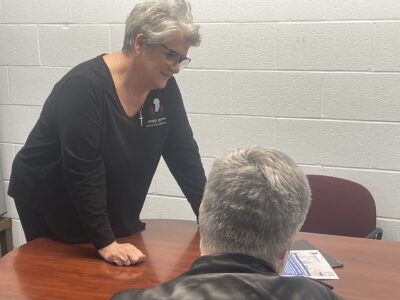
Chris Daugherty, Wheeling Park High School football coach and athletic director, addresses student athletes on the topic of "sextortion" Wednesday at WPHS. (Photo by Joselyn King)
WHEELING – A lot of parents, coaches and teachers will tell youths “just stay away from that stuff” when it comes to avoiding trouble and making bad life choices, according to Chris Daugherty, Wheeling Park High School football coach and athletic director.
But avoiding the use of drugs and alcohol is different from the problems among school students posed by “sextortion,” he explained.
“If you do that (avoid drugs, alcohol and similar issues) you’re going to be OK. You can make the right decisions to stay away from bad things,” Daugherty told male athletes gathered at WPHS on Wednesday.
“But with this (sextortion), they’re coming after you. So it’s hard to stay away because you don’t know you’re the target. They are going after you.”
WPHS student athletes – both male and female – were assembled separately for education seminars on “sextortion,” defined as the practice of extorting money or sexual favors from someone by threatening to reveal evidence of their sexual activity.
Ohio County Schools Assistant Superintendent Rick Jones, who also serves as the district’s safety officer, told the male athletes that educating them about sextortion has become necessary following recent incidents across the nation.
Typically, these involved a high school student – usually a popular male student athlete – being approached online by someone they believe to be a female. The person online entices them into sending a nude photograph of themself, and almost immediately they are blackmailed. A person on the other side of the conversation informs them if they don’t pay a specified sum of money the photos will be made public.
This has caused considerable mental and emotional trauma for some students, with some incidents ending in their suicide, Jones said.
A lot of times the victim might not even provide a photo to the online perpetrator. In many cases, another photo of them that already exists online will be altered, and their face will be put on another photo showing them in a compromising position.
“The number one focus attack is on high school male athletes,” he continued. “Why do you think that is?
“You have a lot to lose. You’re popular. Probably you have access to money or know someone who does.”
A web search on the word “sextortion” shows those teens who have committed suicide during a sextortion attempt, Jones continued.
“They are good-looking kids, and they’ve taken their lives all over the place.” Jones said. “All I know, if I were your age and I listened to all this stuff (about online threats to young people) … if I happened to be online and somebody sent me something like this … something is going to go off in my head.”
Daugherty noted he had never even heard of the word “sextortion” until recent years.
“We’re sheltered a bit here and away from the things that happen in the big cities,” he told the athletes.
But he recounted how in nearby Peters Township, Pennsylvania a student is facing as many as 300 criminal counts relating to sextortion and catfishing.
“He was manipulating the pictures of guys and girls into some terrible stuff,” Daughterty said. “He did a lot of damage with that.”
Investigator Brad Mason with the West Virginia State Police Crimes Against Children Unit provided a brief presentation to the male students. He confirmed male athletes between the ages of 14-17 are most often the target of sextortion.
Mason noted perpetrators online are most often living in foreign countries such as India, Nigeria or Lebanon.
He recommended those who have had explicit photos of themselves places without their permission online to go to the website takeitdown.ncmec.org, a free service that can help victims remove or stop the online sharing of nude, partially nude, or sexually explicit images or videos.
Female athletes received a presentation from Katie Banal, community education coordinator for Harmony House Children’s Advocacy Center.
She stressed to the young women that sextortion “is not your fault” when it happens.
When it does, she said they should first contact a trusted adult, the local police, the FBI tipline and the National Center for Missing and Exploited Children when warranted.
If their teammates are targeted, Banal suggested they listen without judgement, encourage the teammate to report the incident, offer their support and not spread rumors.
Community

WPHS student athletes educated ‘sextortion’
Jefferson County Resource Network connects area
Ohio Valley Newsliners:
BELMONT COUNTY SHERIFF’S DEPARTMENT At 9:50 p.m. Wednesday, an officer on a traffic stop near the Marathon ...

Wheeling’s dog park in Warwood opens early

Students turn trash into art for local contest