
History opens its doors in Mount Pleasant
Trending
MOUNT PLEASANT -- Visitors will have a chance to step inside some of Mount Pleasant's most significant historic buildings Sept. 13 as the village takes part in Ohio Open Doors, a statewide celebration of historic places.
Three historic sites will open their doors for free that afternoon, giving visitors an opportunity to learn more about Mount Pleasant's role in the antislavery movement, the Underground Railroad and the region's Quaker history.
Mount Pleasant was established in 1803 by Jesse Thomas, a Quaker from North Carolina, and Robert Carothers, an Irishman from Virginia. With a strong Quaker presence, the village became an important stop on the Underground Railroad and a refuge for people escaping slavery. Residents also established a school for free Black children and, in 1848, opened a Free Labor Store that sold no goods produced by enslaved labor.
The village also was home for about a year to Benjamin Lundy, an early leader in the abolitionist movement. Lundy lived in Mount Pleasant from 1822 to 1823 while publishing his newspaper, "Genius of Universal Emancipation," which advocated for the abolition of slavery. His former home in Mount Pleasant remains standing, as does another former Lundy home in St. Clairsville.
The Sept. 13 events will give visitors a chance to see some of that history firsthand.
From 1 to 3 p.m., the Abigail Flanner chapter of Questers International will host "Built to Last," featuring two historic buildings at different stages of preservation.
The Log House, 479 Union St., will be open as an example of adaptive reuse. The historic log dwelling has been restored and returned to everyday use as a specialty retail shop. Visitors can see how original features were retained and stabilized while the building was adapted for modern use.
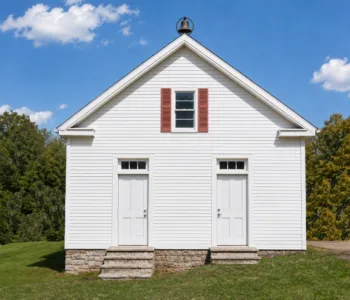
A short walk away, the Black Schoolhouse represents a restoration still in progress. The schoolhouse served Mount Pleasant's African American community in the 19th century, and visitors will be able to see the work that has been completed and what remains underway.
"A finished building tells you what preservation looks like. A building still under repair tells you much more," said Angela Feenerty, president of the Abigail Flanner Questers Chapter.
The Questers also will offer a self-guided walking tour of 11 sites connected to Mount Pleasant's role in the Underground Railroad and the local freedom movement. The tour is based on A.G. Houk's novel "The Road to Freedom."
From 2 to 4 p.m., the Historical Society of Mount Pleasant will open the Ohio Yearly Meeting House.
Completed in 1814 by builder Jacob Ong, the brick meeting house was the first Quaker yearly meeting house west of the Alleghenies. It attracted Friends from across Ohio, Pennsylvania and the Indiana Territory.
The building has been owned by the state since 1950 and is managed locally by the historical society. It normally is open by appointment only from April through October.
The overlapping hours will allow visitors to see all three buildings during one afternoon.
Mount Pleasant is a National Historic Landmark district because of its significance to the antislavery movement and Underground Railroad. Visitors should be aware that the historic buildings present accessibility challenges.
Ohio Open Doors is a program of the Ohio History Connection that gives the public free access to historic buildings and places through tours and special programs. The program began in 2016 to mark the 50th anniversary of the National Historic Preservation Act of 1966 and has been held every other year since.
This year's program coincides with the nation's 250th anniversary. Organizers have set a goal of at least 250 events throughout Ohio, with at least one event in each of the state's 88 counties.
Ohio Open Doors is co-sponsored by America 250-Ohio, Heritage Ohio, the Ohio Local History Alliance, the Ohio Museums Association, the Ohio Travel Association and Tourism Ohio.
All Ohio Open Doors events are free and open to the public. A statewide listing of participating sites is available at ohiohistory.org/opendoors.