Dogs trained at prison
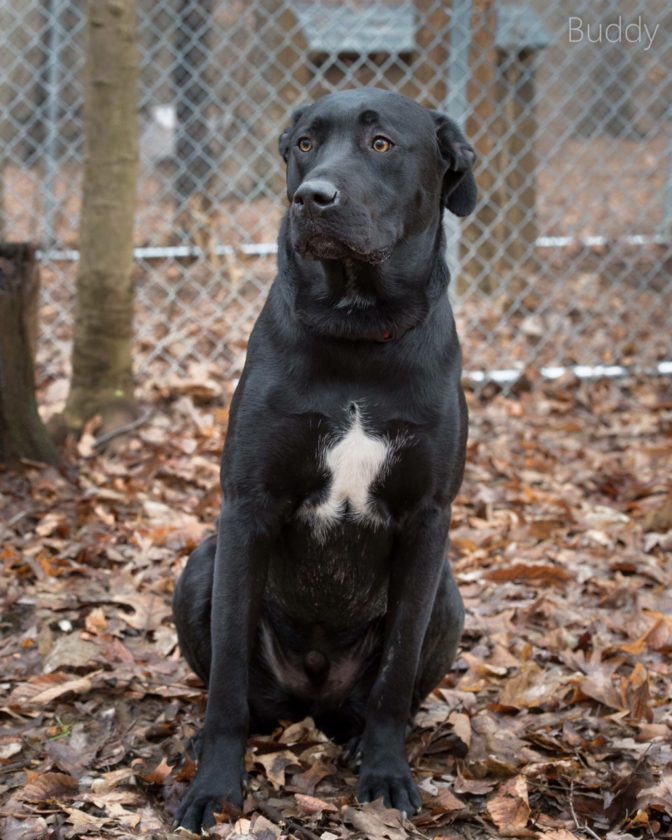
Photo provided The Belmont County Animal Shelter and Belmont Correctional Institution are working together to offer inmates an opportunity to train dogs in preparation for adoption. Here Buddy, a 2-year-old Labrador, is one of the graduates of the program.
ST. CLAIRSVILLE — The Belmont County Animal Shelter and Belmont Correctional Institution are working together so that inmates can train dogs to better prepare them for adoption.
Michael McCutcheon, an inmate at the correctional center, wrote to The Times Leader about the experiences he had while training an older beagle named Dandy.
“When us inmates have these dogs, they are with us morning, afternoon, and evening, just as if they are our dogs. Because of this, we inmates know these dogs’ likes, dislikes, habits, schedules and things that even the shelter workers couldn’t possibly know. It is so hard for us not to get attached to these dogs,” McCutcheon wrote.
He stressed the impression the dog made on him.
“When Dandy arrived in June, it was very obvious that he was a very loved and taken-care-of dog,” McCutcheon noted. “It was very obvious that he was really missing the person that he loved, and by the looks of him, the person loved Dandy very much as well.”
He added that the 8-year-old dog is looking for a good home.
“I won’t be released until 2020, and I have begged everyone in my family to adopt him, but they are either unable to, or choose not to,” he wrote, adding that taking responsibility for the dog motivated him to change and seek reformation. He indicated he intends to continue to work with animals after his release.
“The shelter is also bringing about positive changes to inmates’ lives as well. I was once a menace to society, and because of what I found in this dog program, I will now make positive changes to society,” he added.
Animal shelter Director Angela Hatfield agreed that the program is beneficial in a number of ways.
“It’s been going on for quite a few years now,” Hatfield said. “In the three years since I’ve been here, it is a win-win for us and the inmates. The inmates get community service hours for training the dogs. … They get credit of time for the training.
“We have two programs at the prison,” Hatfield said, noting the programs are conducted in the main prison and in the transitional area beside the prison where inmates are trained in a trade before they are released. “They also learn to do dog training.”
Hatfield added that the criteria for inmate participation usually include past experience with dogs and a love of animals.
“This is all an obedience training program,” she said, noting the dogs are crate-trained. “They’re taught the normal obedience.”
She added that many of the inmates provide additional training to the animals.
“The dogs live in the cubicle with the inmate. The dogs are with the inmate 24/7. There’s a crate by the bunk where the dog is. They’re with the inmate quite a long time, and honestly we have quite a few inmates or inmates families that adopt the animals,” she noted. “The families give credit to training the animal to getting this person going in the right direction in life.
“We have a lot of people that come to adopt who are working full-time jobs, so you don’t have the time to train an animal, so that just takes that off the table. So they get a dog that’s crate-trained that they can take home and be a part of the family and not have to focus on the training of the animal.”
Hatfield said there are usually 20 dogs in the program at any given time. These include older dogs and puppies that are just 6-7 months.
“It’s a continuous turnover,” she said. “You take one out, you put one in.”
Eric Lyle, assistant warden at the correctional center, said the arrangement has been beneficial to all participants.
“Right now we have 10 dogs from the animal shelter,” Lyle said. “We have the ability to house 26 dogs total. We have six at our main compound and four at our camp, and each of those dogs has a primary and backup handler that’s assigned to them. Right now we’ve only got 10 guys that are involved with those 10 dogs.”
He added that the program also provides an incentive for positive behavior.
“Those guys are all screened for that responsibility, and if they receive rule infractions inside the institution, they can be removed (from the dog training program) for those infractions, depending on what the infraction is. If they misbehave here or have poor conduct, they can be removed from that program,” Lyle said. “The guys who have that responsibility take it pretty seriously and want to do a nice job with it and stay out of trouble.”
Lyle noted that the dogs leave the program ready for their new families.
“They train all the dogs with basic commands. I think it’s helped a lot with the adoptions for the dog shelter. It seems that the dogs who go through the program here are adopted a little faster with that training, and we have a good partnership with the animal shelter.”
Lyle added that the prison has worked with dog programs for about 20 years.
“We’ve had dog programs since probably about 1997,” he said.
The prison also operates a Dogs for Warriors program, where inmates train special dogs for veterans.
“I think it benefits everybody. It benefits the inmates that are responsible for the dogs. It obviously benefits the dogs if it helps them with adoption and gets them into a good home, and it helps the shelter as well to keep their numbers down and get them adopted quicker into a good home.”
Lyle said the Dogs for Warriors dogs are chiefly shepherds.
“It’s another training program, and those dogs are given to wounded warriors that were in the military or in service.”
Local News

WVU Medicine Cherishes Partnership With Wellness Weekend

Ohio judges now free to endorse political candidates
JVS Transition To Work students gain on-the-job experience
Visitors asked to leave Hellbender Preserve with memories, not plants
Bomb threat prompts evacuation, early dismissal at St. Clairsville schools