
Trending
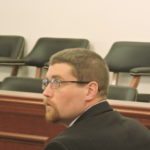
ST. CLAIRSVILLE -- David Carl Kinney's interview with police two days after he allegedly shot and killed a man in his Bellaire home can be introduced during his upcoming murder trial, a judge ruled Thursday.
Belmont County Common Pleas Judge Frank Fregiato denied a defense motion to suppress evidence from the interview, which Kinney's attorney, Chris Gagin, argued was coerced.
Kinney, 30, of Brilliant is charged with murder with a firearm specification in the fatal shooting of Brad McGarry, 43, at McGarry's home in Bellaire. Kinney's trial remains set for July 18, but Gagin said he has not yet received toxicology, autopsy and ballistics reports and he may request a continuance.
On the day of the murder, May 7, Kinney contacted police and said he had found McGarry's body while visiting McGarry's home. On May 9, he was asked to come to the Belmont County Sheriff's Department for an interview.
According to law enforcement, Kinney gave several conflicting stories under questioning and eventually claimed to have shot McGarry in self-defense.
Gagin argued Kinney was under the impression he was in custody, and that Detective Ryan Allar began conducting an interrogation before informing Kinney of his Miranda rights.
"Mr. Kinney is exceedingly emotional throughout this process, for long stretches," Gagin said, referring to Allar voicing his suspicions to Kinney regarding his story prior to the Miranda warning. "Based on the interrogation techniques that are being utilized against Mr. Kinney -- which have reduced him to emotional rubble at this point -- how he can truly be deemed to have been giving a voluntary statement, given the emotional state that he was in, is yet another factor."
Gagin also said an officer suggested what Kinney was to include in a written statement.
Allar informed Kinney of his Miranda rights about two hours and 40 minutes into the interview.
"Everything after that point should be excluded from … trial," Gagin said.
Chief Assistant Prosecutor Kevin Flanagan countered that the questioning was conducted properly. He said there were no coercive tactics used.
"The video is the video … . It speaks for itself," Flanagan said. "Admonitions to tell the truth … are not coercive in nature. … A police officer's assertion to the suspect that he is lying or that the suspect would not have another chance to tell his side of the story does not automatically render a confession involuntary."
Flanagan said Ohio law does not require a Miranda warning be issued when an inquiring officer sees discrepancies in a witness' statements.
"It is the totality of the circumstance. It is not, in any way, triggered simply because now Detective Allar believes that Mr. Kinney may be a suspect or is a suspect in a homicide," he said. "Mr. Kinney came to Belmont County Sheriff's Department not as a suspect, but as a grieving friend."
Fregiato said he reviewed the entire interview and interrogation extensively.
"The defendant voluntarily appeared as a witness, two days later," Fregiato said. "He was never put in custody, he was never handcuffed, he was never restrained. He was free to leave at any time, and as a matter of fact he was told that."
Fregiato said the interview was "fairly polite" and "respectful."
"Not coercive at all, in this court's opinion," Fregiato said. "There were some rough points throughout the interview, but overall it was quite congenial. … It did eventually change, and when it changed, the Miranda warnings were given."
Kinney's bond remains set at $1 million.