St. Clairsville gets approval for waterline replacement

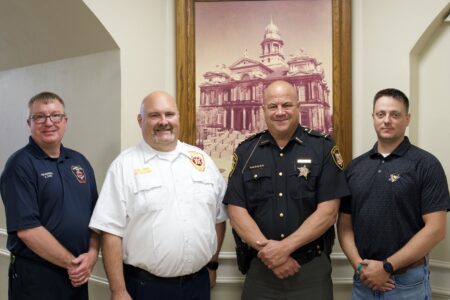
T-L Photo/ROBERT A. DEFRANK St. Clairsville’s temporary waterline on Reservoir Road will have to see the city through the winter, but work on a new permanent line has been approved and will begin after the first of the year.
ST. CLAIRSVILLE — The city is proceeding with replacement of its main waterline after receiving permits this week from the Ohio Department of Transportation.
“ODOT gave us approval, and we’ve got a plan of action figured on what we’re going to do,” Safety and Service Director Jeremy Greenwood said, adding the city received the paperwork Monday. “With the holidays, we’re not going to move until after the first of the year.”
During the summer, city employees discovered the main line from the water treatment plant was leaking.
The aged line was in poor condition and its replacement quickly became a top priority.
Since August, the city has been fed water through a temporary waterline located on top of Reservoir Road where it crosses Interstate 70.
The city hopes to be able to run the permanent waterline through the old line’s casing under I-70 to save the cost of drilling a new one.
“The (Environmental Protection Agency) is really adamant on wanting to know what our plan is,” Greenwood said. “We’ve got a plan of attack, how we’re going to handle it, what we’re going to do.”
Greenwood said the first step will be checking the current culvert to determine if it can be used.
The city should know two weeks after the process starts.
“If not, we’re going to have to do a whole other casing,” he said.
Greenwood said the project should cost about $800,000 if the old casing is usable; however, if the city must drill a new passage beneath the highway, added cost could be $500-$600 per foot for 160 feet under I-70. That could add $80,000-$96,000 to the total project cost, and the city would be footing the bill.
“We’ve got some reserves that we’ve built up for other projects,” Greenwood said.
The tentative timeline suggests it might take two to three months to complete the project.
“Hopefully by March at the latest we’ll have the new waterline under the interstate,” he said.
Greenwood said one of the chief points ODOT addressed in its analysis of the proposed project was how traffic on the highway would be managed during the work.
“We’re going to close one lane down on one side, shore up the interstate, excavate it out, extend the pipe up into a safe zone, close it all up and move to the other side, so there’ll only be one lane of one direction closed at a time,” he said.
“Once we get the new pipes in and extended out, we’ll put in a fiberglass liner that will extend the life of that pipe for another 50-60 years,” he said.
However, this will mean much of the work will be done during the winter months. Greenwood hopes it will proceed in good time.
“It depends on how bad we get. There’s some things that aren’t really weather-dependent, but there’s probably going to be times when it gets cold and we’re probably not going to get as much done. Hopefully sooner, but at least we’ve got the starting point now.”
There is also some concern about how the above-ground temporary line will fare during the cold season.
“If it starts to get subarctic, what we’ll do is put some heat blankets and some heat tape around that line going across the interstate,” he said.
He added that the walls of the temporary pipe are about an inch thick.
“It can handle some cold. … The main section that we’re worried about is the section that goes over the interstate because it’s on a concrete bridge that’s got airflow around it on all sides.”
“That’s a huge thing we’ve got to get fixed, and I’m delighted,” Mayor Kathryn Thalman said. “ODOT gave us a Christmas present when they said we could start working on it.”
Local News
Shadyside cooks up America 250 celebration with hot dogs, pie and plenty of red, white and blue
SHADYSIDE — The village of Shadyside is preparing to celebrate America’s 250th anniversary. To celebrate, the ...
ST. C. will soon have its first Thai restaurant
World War II discovery in France leads back to Ohio Valley

Wellness Weekend returns to challenge and entertain

Voice Of Valor: Military gave Wheeling resident purpose and motivation in life