
Preparing for the worst
Emergency drill conducted Monday at East Ohio Regional Hospital as part of statewide exercise
Trending
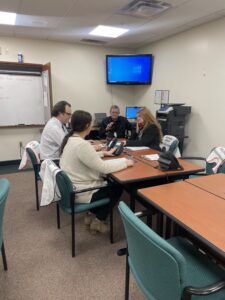
MARTINS FERRY - East Ohio Regional Hospital's staff sprang into action Monday morning, testing their readiness as part of a statewide drill involving 30-40 hospitals across Ohio.
Kayla Shreve, public information officer with the hospital, said the drill began early Monday morning and was completed fairly quickly.
"It went very well. It was actually one of the more mild drills that we'd done," she said.
The drill was titled "Aluminum Avalanche" and involved multiple injuries and traumas.
"The scenario was there were bleachers at a local fairgrounds that collapsed," she said. "We, through the exercise, accepted 16 patients who came through our (Emergency Department) that we either transferred out or we took care of, sent to surgery, placed on one of our floors, whatever that might be. It went very smooth. Our ED did an amazing job."
Shreve said this called for invoking mass-event protocols and putting the hospital staff on alert. The operation commander for the majority of the incident was Administrator Bernie Albertini.
"We do have to do a switch during the drill to show how a handoff would be," she said.
"We call a Code Yellow, which just kind of alerts every department," she said. "All the physicians at that point report to the physicians' lounge where we triage all of them and placed in the area where they're most needed."
She said the drill planners complicated the scenario with a computer system crash, making electronic medical records inaccessible and calling on the staff to fall back to paper records for documentation.
"They threw timed scenarios at you throughout the day ... they give you the main subject of the scenario - the disaster that happened - and from there they have more prepared scenarios," Shreve said.
These include streets being blocked off with people trying to find their family members and obstructing the ambulances.
"We're going to do whatever we need to do to make a clear path for the ambulances to come and bring the patients to us. It was just scenarios like that,"
Shreve said staff did all they could to simulate reality.
"We did have nursing students that were here that acted as our patients for us in the simulation," she said. "That helped out a ton. It's hard to not have a live person and just pretend. It's nice to have an actual person come through and to tag them with appropriate color correlation to what degree of injury they have, or whether they were dead on arrival so we can get people moved into the correct places we can move them to in a real-life scenario."
"There's various physicians that are in the room the entire day with us," she said. "As we go through the drill, they'll call out if they have time," she said. "For example: 'Now it's 9:10 a.m. and your EMR just went down on top of everything.'"
Shreve commended Brad Simms, incident commander and safety officer, for his work in making sure staff have access to information on what to do in an emergency.
"Halfway through the day, at 10 a.m. we do a real-time Zoom call with all of the local hospitals that are participating in the drill," she said. Discussion includes how many beds are available and if transportation and added resources are necessary. "Something we would do in a real scenario to lean on each other and help each other where we can. We were lucky to be able to have a surplus of blood throughout the experience because we were able to get some from the Red Cross during the event, but there were a couple of other facilities that were running low on blood, so we talked about how that would work and how we would help them out and get resources that need to to the facilities that need it."
A roundtable discussion followed the drill, including conversations about where they could improve.
"We also give feedback, if we think the drill was helpful, if we think anything could be improved upon on that end of things," she said.
"It's a very good drill because it does just put you in that scenario. It shows whether an organization works as a well-oiled machine together, or if it doesn't, and luckily everything went very smooth for us. Bernie has a ton of years' experience doing this, so he's a great commander. He knows how to move through all of the scenarios very quickly. He knows just who to call, what to do," Shreve said.
"It definitely gave peace of mind to let you know that your organization is capable of taking on these things. God forbid anything ever does happen."