Remains of Bridgeport Army pilot killed in WWII identified, to be buried locally
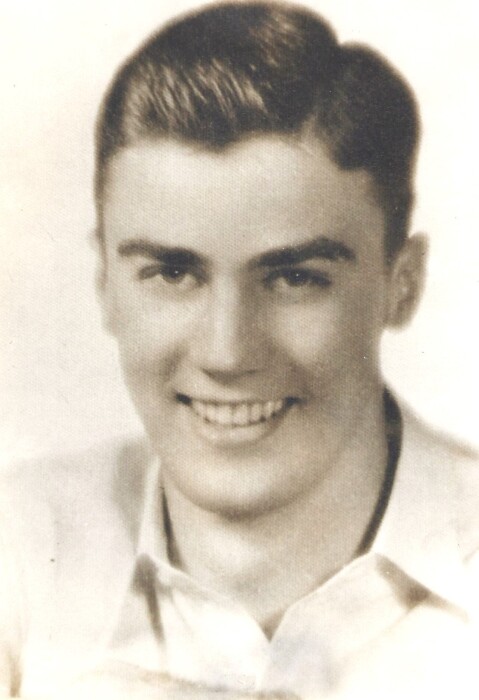
U.S. Army Air Forces 1st Lt. Charles G. Reynolds
A U.S. Army pilot that was missing in action in World War II has now been accounted for and will return home to be buried Sept. 23.
The Defense POW/MIA Accounting Agency (DPAA) announced that U.S. Army Air Forces 1st Lt. Charles G. Reynolds, 24, of Bridgeport, Ohio, killed during World War II, was accounted for July 18.
According to Wilson Funeral Home, friends will be received to honor and celebrate Reynolds’ life at the Wilson Funeral Home in Brookside, Ohio on Sept. 23 from noon until services at 2 p.m. Interment at Weeks Cemetery will follow the services. Full military honors will be conducted by the U.S. Army Color Guard.
According to a DPAA release, in late 1943, Reynolds was a pilot assigned to the 498th Bombardment Squadron, 345th Bombardment Group, in the Southwest Pacific Theater. On November 27, the B-25D Mitchell which Reynolds was a crewmember of, did not return from its bombing mission near Wewak, New Guinea. The aircraft had sustained heavy damage from anti-aircraft fire and the pilot was forced to make an emergency landing in the waters of Karau Lagoon, in the Murik Lakes. Efforts to recover Reynolds’s remains were unsuccessful, and the crew was labeled Missing In Action.
Following the war, the American Graves Registration Service, the organization that searched for and recovered fallen American personnel, conducted exhaustive searches of battle areas and crash sites in New Guinea, concluding their search in late 1948. Investigators recovered fragmentary sets of human remains near Murik, as well as wreckage that was identified as belonging to a B-25 Mitchell. The remains, designated X-4180 and X-4196, were consolidated and declared unidentifiable, and were interred at Fort McKinley Cemetery in Manila.
In 2019, a recovery team working near Murik found possible material evidence, which prompted historians and forensic anthropologists within DPAA to propose the disinterment of X-4180. By January 8, 2020, X-4180 was exhumed and sent to the DPAA Laboratory for identification.
To identify Reynolds’s remains, scientists from DPAA used dental and anthropological analysis, as well as material and circumstantial evidence. Additionally, scientists from the Armed Forces Medical Examiner System used mitochondrial DNA (mtDNA) analysis.
Reynolds’s name is recorded on the Walls of the Missing at the Manila American Cemetery and Memorial, an American Battle Monuments Commission site in the Philippines, along with others still missing from WWII. A rosette will be placed next to his name to indicate he has been accounted for.
Local News

Sinclair Foundation donates thousands to Bellaire Library

Belmont County bomb threat suspect’s case moved to Common Pleas Court

Two arrested in Brooke County on child neglect charges after 1-month-old’s death
Ohio Dems push affordability legislation; critics tout consequences
Ohio House Democrats House recently unveiled a series of legislative proposals on a major issue in this year’s ...
Artemis II’s moonbound toilet working again to astronauts’ relief