
Martins Ferry residents voice concerns over proposed tax hike
Trending
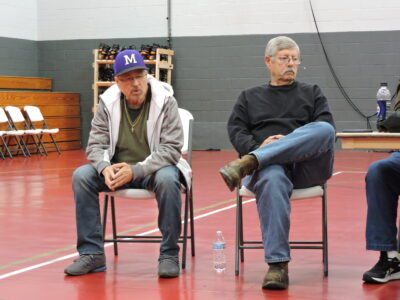
MARTINS FERRY -- Residents voiced some concerns over the proposed 1% tax hike as council members outlined how the revenue would be used.
Mayor John Davies said during a town hall meeting last week that the increased funding would support the city's general fund, which supports the police department, EMS department, city building utilities, recreation, liability insurance and more.
"There's a lot of things that come out of the general fund," he said.
Auditor Jack Regis Sr. said that if the income tax increase passes in the Nov. 7 election, he hopes to allot certain amounts of money to different projects and departments such as the recreation department and the street department for paving and demolition.
"Andy (Sutak, service director,) had a swell idea. If we get the tax, we could borrow money and get a big lump of houses torn down and then just have that percentage projected to there to make sure it's paid every year," Regis said.
Regis also said he wants to make sure that enough money carries over annually to cover expenses for the first three months of the following year.
The carryover fund helps cover payroll, bills and other expenses at the beginning of the year.
Councilman Thomas Burns noted that many other cities across Ohio are facing similar budget issues as Martins Ferry.
He said many cities have income tax rates that are much higher than Martins Ferry's.
"My brother lives in Carrollton, and he's been paying 5% for years, but the infrastructure is in good shape. You don't have a bunch of homes dilapidated. Everything's in good shape. Now, I think that's pretty steep, but they have been paying some of these percentages for years. They're a little high. That's just too much, but I don't know how it's broken down with their demographics, and that's what we've been talking about here," he said.
Burns said that the demographics in Martins Ferry have changed drastically over the past few years which is part of the reason why council would like to raise the income tax.
Several residents raised concerns that the increased income tax would be used to raise wages for tge city administration.
Council President Kristine Davis said that council can pass an ordinance stating that the funds will not be used for wages, but subsequent councils will be able to reverse that decision. She said a statement was made in 2000 or 2001 when the current 1% income tax was put into place that it would not be used for wages, but council at the time reversed that decision at a later date.
"The bad thing is, is the way our government in this country, this city, this state is set up, we can put that in and we can put it in an ordinance and say that. I'll admit to my own naivete back then. I thought if we would put it in an ordinance that would make it permanent, but it doesn't. I'll say that we can do our best and put it in. That is not to say that the subsequent council can't come in and make some changes to it," she said.
Sutak said property taxes could decrease if the income tax increase passes. He explained that the police and EMS levies could be canceled. Council would have to pass an ordinance to lower the property tax.
"What you would have to do is vote and then request the Budget Commission to take off the police levy and EMS levy off the property taxes so council would have to pass a resolution requesting that," he said.
Sutak said he believes raising the income tax as opposed to property taxes will benefit the city more.
"What you hope for is the hospital gets bigger, you hope for businesses to come with more employees, so your tax could grow. Most of the time, the property taxes really don't grow. ...That's the problem with the property tax. They're stagnant," he said.
Sutak said that paying extra income tax can be more convenient for residents as opposed to property taxes.
"Your income tax is taken out biweekly, monthly or whatever, at a smaller proportion, and your property taxes are twice a year. Whatever those are, you got to come up with that lump sum when those property taxes are due. If you're in escrow, they have it taken out of your mortgage, so it's set aside," he said.
For voting information, contact the Belmont County Board of Elections at 740-526-0188 or visit boe.ohio.gov/belmont. The office is located at 52180 National Road in St. Clairsville and is open from 8:30 a.m. to 4:30 p.m. Monday through Friday. Early voting is underway.