Federal EPA to test St. C. water supply for ‘forever chemicals’
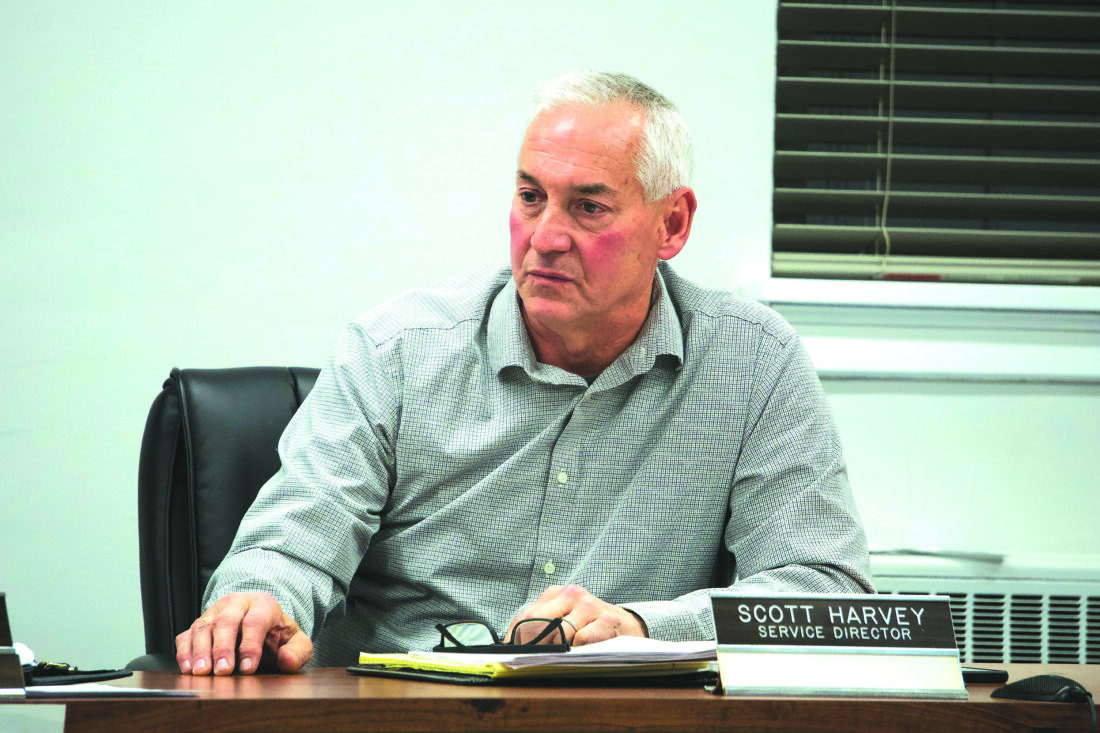
St. Clairsville service director Scott Harvey informs city council that the federal EPA will be testing the city’s water for Perfluoroalkyl and Polyfluoroalkyl Substances levels.
-
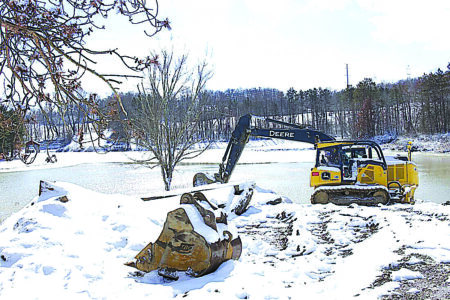
- The St. Clairsville main reservoir recently being dredged.
ST. CLAIRSVILLE — The federal EPA will soon be testing St. Clairsville’s water for Perfluoroalkyl and Polyfluoroalkyl substance levels.
PFAS are commonly referred to as “forever chemicals.”
According to the National Institute of Environmental Health and Science, PFAS are a large, complex group of synthetic chemicals that have been used in consumer products around the world since about the 1950s. They are ingredients in various everyday products.
Service director Scott Harvey informed city council on Monday that the EPA will be testing the water in the main reservoir and the Provident reservoir
He added that the EPA will also test Belmont County’s water levels due to the city purchasing some amount of water from the county.
“I’m assuming they’ll test the county water at the point of entry at our water plant where we actually take on the county water. I don’t know whether they’ll test beyond that entry point or not, but there’s still some questions that aren’t totally answered yet,” Harvey said. “They’re testing the raw water, so once it enters our system they’ll have the PFAS level we’re at. And then we treat the water.
He added that once the water is treated, the PFAS levels can be adjusted or lessened through treatment.
Harvey said that the city treats its water with a carbon feed system, which he believes is the best way to treat that.
“Our system is very old, but actually in this case, it helps us. It works for us because the carbon feed system mitigates a lot of the chemicals, it scours them out basically,” Harvey said.
He added that Friday will start the beginning of a long process but he doesn’t want to alarm the public.
“At this point, we have no evidence that our water system has any level of these PFAS but we want to make sure that we don’t,” he said. “We don’t want to raise any concern about it, other than we want to make sure that it’s not something that’s in the water.”
He added that he believes the testing is a positive thing for the community to ensure the city’s water is safe.
According to the EPA’s website, studies in laboratory animals indicate some PFAS can cause reproductive, developmental, liver, kidney, and immunological toxicity. In addition, exposure to some PFAS produce tumors in laboratory animals.
In humans, the most consistent findings from epidemiology studies are increased cholesterol levels among exposed populations, with more limited findings related to infant birth weights, effects on the immune system, cancer and thyroid hormone disruption. Some PFAS can cause adverse effects on the respiratory system following acute inhalation exposures.
“The federal EPA program for testing on emerging contaminants in the system. It’s a free testing program that we enrolled in with the federal EPA,” Harvey said. “And what that does basically give us a baseline to see where we are with the contaminants, the PFAS. Our program will start Friday at no cost.”
He added that the EPA will collect samples from the city’s water and then a third-party testing laboratory and then the city will receive the test results.
Harvey said that even if the city doesn’t have any PFAS in its water it will allow the city to set a baseline for future tests.
“The whole reason we got involved with the program is because it’s cost effective obviously, but also if there are emerging contaminants in our water system, we’d like to know about them so that we can deal with them,” he said.
Local News

Groza named to High School Football Hall of Fame

OVAC to add girls wrestling tournament

Belmont County Cat Stray Shun are raising funds throughout the holiday season
Federal EPA to test St. C. water supply for ‘forever chemicals’

Belmont County mourns former Common Pleas Judge Frank Fregiato