Martins Ferry asking residents to identify water line types
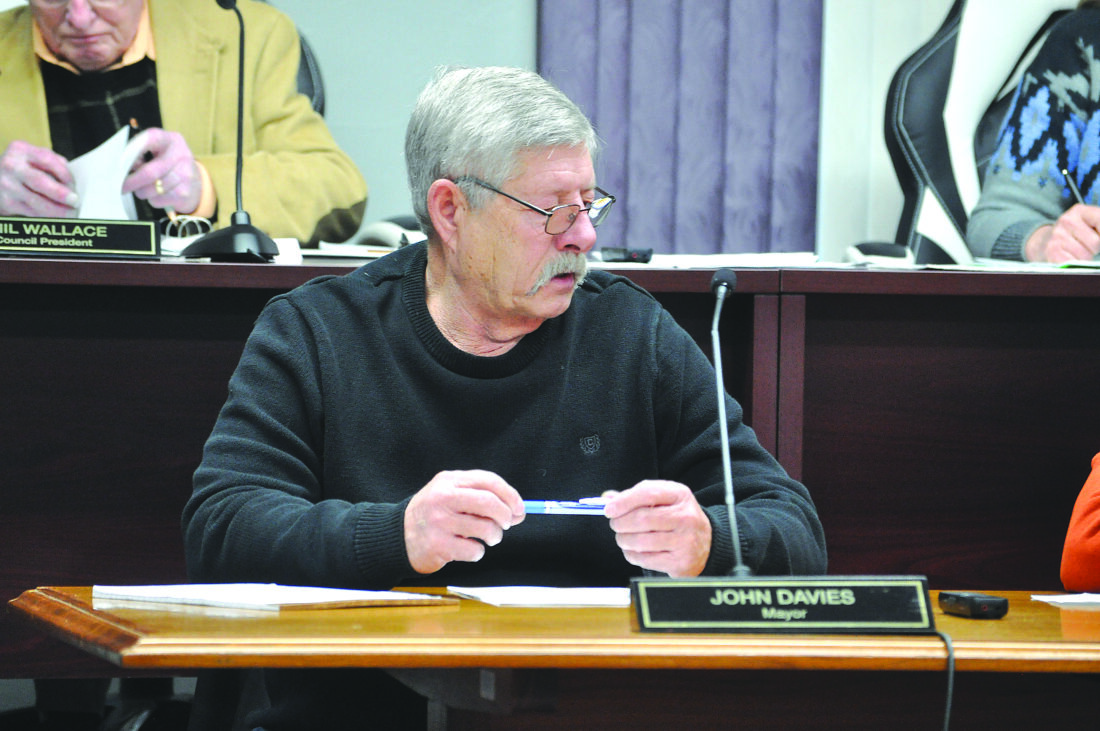
Photo by Stephanie Elverd Mayor John Davies explains how residents can determine what type of pipe is connected to their water meter.
MARTINS FERRY — With the federal deadline to replace all municipal lead water lines still more than a decade away, Martins Ferry officials are taking steps now to identify where lead service lines exist and to position the city and residents for available funding.
Under a U.S. Environmental Protection Agency mandate finalized in late 2024, all public water systems nationwide are required to replace lead service lines by 2037. The rule, part of the Biden administration’s Lead and Copper Rule Improvements, is aimed at eliminating lead in drinking water due to its serious health risks, particularly for children.
To comply, Martins Ferry is asking residents to help identify what type of water line runs from the curb to their home.
“We really need to start working on the lead lines and getting that checked throughout the city and so on,” said Martins Ferry Service Director Andy Sutak. “If you can take a picture of where your meter is and get to us, it will help us with registering where the lead lines are.
“There is funding out there and you have to understand that if the lead lines are on the city side, we will take care of them but if the lead lines are on the property side after the shutbox, that is your responsibility,” Sutak added. “We are trying to get funding because I know a lot of people don’t have the funds to do that, but we have to get these reports in so we can get them into the state EPA and the federal EPA. We are working on funding on both sides – for the city and for the residents.”
“We might be able to send some of that [information] in right now,” Sutak added. “And fast track some funding. The bigger map we have of our lead lines, the bigger opportunity we have for funding. The funding is out there, it’s just knocking on the door with all the prerequisites together.”
Councilman Andrew Smay asked how residents can determine whether they have lead lines and what their responsibilities would be.
“If somebody in the 100-year history of the house has painted over the line, who knows when, would you be able to tell if its lead or not lead just from a picture? And if it is found to be lead, will the city replace it and the resident can reimburse the city for the cost of replacement or do you have to hire your own private contractor?”
Mayor John Davies said responsibility for replacement depends on where the lead line is located.
Davies said residents can perform a simple check if pipes are painted over.
“One one to identify is if you have a lead line especially its been painted over, is to take a knife and scratch it. It will come out silver if it’s lead,’ he said. “If it’s plastic, of course you are going to know right away, and if it’s copper, it’s going to come out a copper color. You don’t have to scratch deep. All you have to do is stretch the paint off. Again, it will be silver if it’s lead.”
Sutak said documentation is the first step.
“Here’s what we have to do first. If you have a lead line on your side, contact us. We need to put this in an RCAP mapping and design for that.” he said, noting that the more pipes located in the city, the more potential for the state and federal funding. “There’s funding out there, but we have to accelerate this.”
Sutak said Martins Ferry plans to contact residents directly through letters and that, if needed, the city will send someone to the home to verify what type of pipe connects to the meter.
“If they are not sure, let us know and we will send somebody out to look at it on their end. If you want to send a picture, we will look it over. If we have to send somebody out we will,” he said.
“We are putting new meters in and the guys are looking to see if there’s a lead pipe on your side and we are going to be very proactive. It’s mandated through the federal government that we replace the lead lines by 2037.”
Davies reiterated that residents are responsible for lines from the curb to their home, but he also reiterated that there is time to secure funding and also stressed that no interruption or shutoff of service will occur during the process.
“If you are found to have lead on your side, it’s not the city’s responsibility, but are not going to shut your water off because you have a lead line,” he said. “There’s going to be funding in place and available. It’s 2037. It’s an 11-year process to replace those lines and get a lot of funding between today and 11 years.”
Lead exposure from drinking water has been linked to serious health consequences, including developmental delays, learning disabilities and long-term neurological damage in children, making the identification and replacement of lead service lines a critical public health issue.
“Remember lead or lead poisoning is tied to mental health, so the replacement is going to benefit the residents, especially young children,” he said.
In addition to the federal mandate, similar legislation addressing lead service line replacement is currently pending in Ohio, which could further shape requirements and funding opportunities for local communities.
Local News

Major snowstorm blankets the Ohio Valley
Martins Ferry asking residents to identify water line types
Republican calls growing for deeper investigation into Minneapolis shooting
WASHINGTON (AP) — A growing number of Republicans are pressing for a deeper investigation into federal ...
Winter weather to disrupt U.S. gas production, increase prices
(The Center Square) — Widespread extreme cold is expected to restrict the production of natural gas in the U.S. ...
Level 3 snow emergencies declared in Belmont, Jefferson counties