‘Twin Pops’ still safe from food dye ban effects
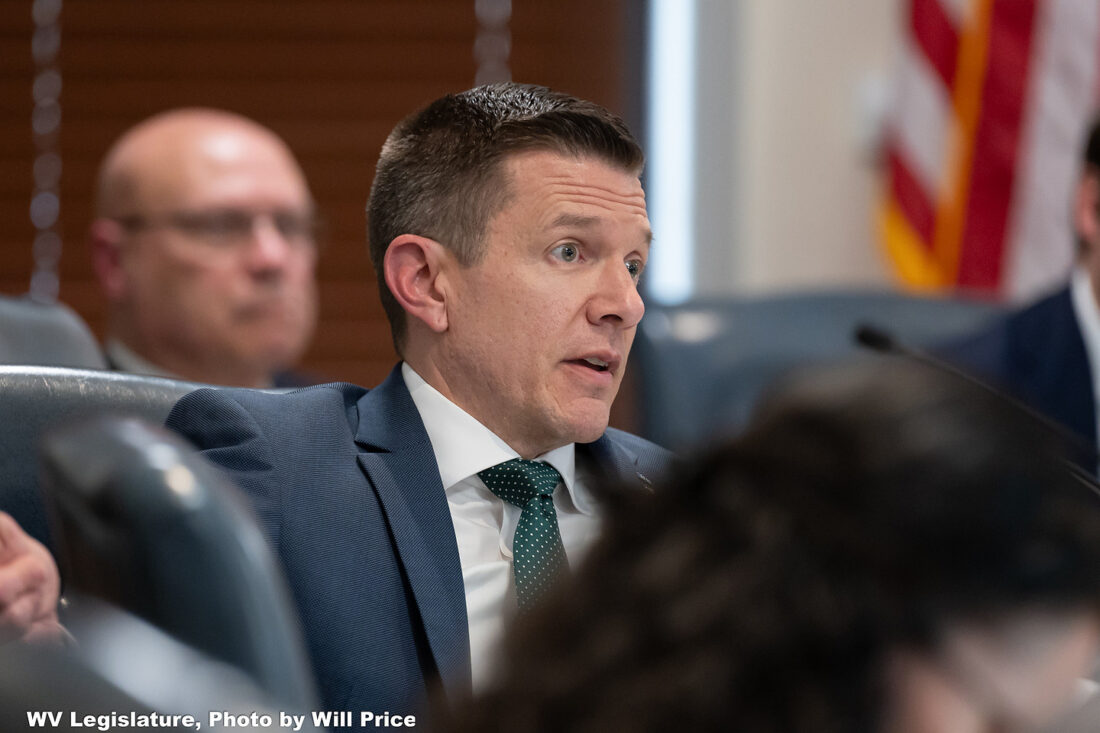
Photo courtesy of WV Legislative Photography State Sen. Ryan Weld, R-Brooke, tried to amend a state law banning food dyes that would affect Zigenfelder's production of its frozen treats.
WHEELING – For now, “Twin Pops” can still be produced and sold in West Virginia.
A law that bans both the manufacture and sale of foods in West Virginia containing certain food dyes remains blocked in federal court after being passed by the West Virginia Legislature in 2025, even after attempts to amend the measure failed during the 2026 regular session.
The law, set to go into effect on Jan. 1, 2028, would have affected Wheeling-based frozen treat company Ziegenfelder, producer of the famous “Twin Pops” sold across the nation.
House Bill 2354, approved during the 2025 session, states that any added substance or ingredients which are “poisonous or injurious to health” cannot be added to any food items manufactured in the state. Among the food additives prohibited by the measure were FD&C Blue No. 1, FD&C Blue No. 2, FD&C Green No. 3, FD&C Red No. 3, FD&C Red No. 40, FD&C Yellow No. 5, and FD&C Yellow No. 6.
A second part of the bill prohibits any meal served in a school nutrition program from serving any food containing the dyes, and adds Red Dye No. 3 and Red Dye No. 40.
Adding the dyes to food that is produced, or selling that which contains them, in West Virginia is considered a misdemeanor under the bill. “And the adulterated article shall be forfeited and destroyed,” it states in the passed measure.
After HB 2354’s passage in 2025, the International Association of Color Manufacturers filed a suit as to its legality, explained State Sen. Ryan Weld, R-Brooke. In December, Judge Irene Berger of the U.S. District Court for the Southern District of West Virginia blocked most of the new law, noting it did not adequately define what is “poisonous or injurious to health.”
The school meal provisions remain and were not subject to the injunction.
During the just passed 2026 regular legislative session, some members put forth a new bill to replace the one blocked in federal court. House Bill 4852 defines “poisonous or injurious” as something “demonstrated, through peer-reviewed scientific evidence to cause a material risk of harm to human health at levels customarily consumed in food,” and has been “expressly designated as unsafe by the West Virginia Code or by a legislative rule promulgated by the Bureau of Public Health.”
Weld in the Senate Judiciary Committee attempted to add an amendment to the new bill to still allow those food items to be manufactured in West Virginia, even if they wouldn’t be sold in the state. This would allow Ziegenfelder to still sell its products in states without such rules.
The new bill, however, died in the Rules Committee this legislative session.
“Since that bill never even made it out of the Legislature, the law that currently has the injunction on it still stands. So Ziegenfelder isn’t affected anyway because the law is on hold,” Weld explained.
Last year, there wasn’t much discussion on the food additives bill in the Legislature before it passed, he continued. He and other lawmakers had assumed the U.S. Department of Health and Human Services under Robert F. Kennedy Jr. already was planning action to ban food dyes and that would override any state laws enacted.
The federal action never came.
“That caused a problem, because we’re now regulating interstate commerce – which we’re not permitted to do under the U.S. Constitution,” Weld said. “Only the feds can regulate interstate commerce under the constitution. They can leave some areas to the states, but the states have been regulating this kind of stuff for a long time.
“The Interstate Commerce Clause of the U.S. Constitution is aimed at prohibiting a hodgepodge of regulations – like ‘I can sell my (Twin Pops) in this state, but I can’t in that one.'”
Weld said he has “no idea” whether the measure will come up again in 2027.
“I would keep my eye on the litigation,” he continued. “We certainly have the authority and right to regulate what is in school lunches in West Virginia, but since the feds didn’t take action on the rest of the stuff, it became problematic.”
Calls and messages left with the Ziegenfelder on Thursday were not immediately returned.
Local News

Pentagon seeks $200 billion in additional funds for Iran War
‘Twin Pops’ still safe from food dye ban effects

Ohio Valley Professional Women Discuss Work-Life Balance At Wheeling Chamber Luncheon
Belmont County Sheriff’s Office donating to American Heart Association
Belmont County Commissioners declare April Sexual Assault Awareness Month