
Martins Ferry police chief says levy renewal is crucial
Trending
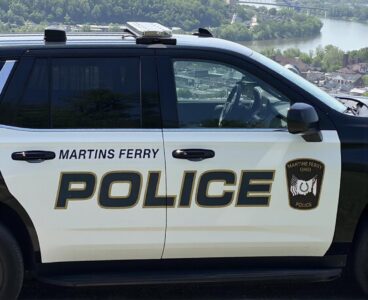
MARTINS FERRY -- Voters in Martins Ferry will decide this May whether to renew the city's 5-mill police levy, a measure officials say is essential to maintaining current staffing levels and emergency response without increasing taxes.
The levy, originally approved by voters and last renewed in 2020, generates about $300,000 annually and is dedicated solely to police department salaries. Police Chief Vince West said the funding plays a critical role in easing pressure on the city's General Fund.
"The levy is just used for salaries and it takes the strain off of the general fund," West said. "It's for our salaries. It doesn’t go to equipment or anything else. It just pays for the officers."
West emphasized the measure does not raise taxes, but continues the existing rate despite rising property values.
"It's the exact same that it’s been since it started," he said. "What was paid last year is exactly what will be paid this year. It's not increasing. It’s not to gain anything. It’s just to keep and continue what we have."
The department currently employs 11 full-time officers, including the chief, along with part-time officers and three full-time dispatchers. Martins Ferry is the only city in Belmont County with 24/7 in-house dispatch services, according to West.
City officials say the levy supports day-to-day operations that include responding to emergencies, conducting investigations, patrolling neighborhoods and maintaining a visible police presence in schools and business districts.
West said the department handles a high volume of calls relative to its size, noting Martins Ferry has the second-highest call volume in Belmont County behind the sheriff's department.
"We're at bare minimum now," he said. "We have to have two officers on at a time and we have the second-highest call volume in Belmont County."
He added that officers routinely respond to a wide range of calls, from domestic incidents -- which he described as among the most dangerous -- to complaints, service calls and emergencies.
"A lot of people don't realize what all our officers do," West said. "Just because they don't see it doesn't mean we are not doing it."
West also highlighted the department's constant presence in the community and the volume of calls handled daily.
"In the city of Martins Ferry, and I was born and raised here, everybody knows 633-2121," he said, pointing to the phone on his desk. "They know our number. We get dangerous calls and we get calls about the football game. People call when there’s a parade. They call us when there's water breaks. We are here 24/7 and we don't mind doing it. We want to do it and we want to continue doing that stuff."
If the levy is not renewed, officials warn the department could face immediate financial strain, potentially leading to staffing reductions and diminished service levels, and police funding would have to be shifted to the General Fund, potentially affecting other city services such as streets, code enforcement and cemetery operations.
"It would mean a lot of decisions that would have to be made," West said. "There might be job cuts and it would cut down on response times, it would cut down on investigation time, it would cut down on a lot of things."
Law enforcement research shows a significant gap between local police coverage and countywide response models common in rural Ohio counties such as Belmont. Urban departments typically respond to emergency calls within five to eight minutes, while rural agencies average 18 to 25 minutes or longer due to staffing levels and geographic coverage. In priority emergencies, response times in rural areas can approach 20 minutes, compared to just minutes in more densely staffed jurisdictions. Studies show that local police levies help maintain staffing levels that reduce response times and improve coverage consistency.
For West, the issue ultimately comes down to sustaining current operations.
"We just want to keep what we have," he said. "I just want to make sure we have the resources to pay these guys a salary and provide services to the community."