
From foundry to future: Warwood site eyed for 100-megawatt data center campus
Trending
WHEELING - A new computing and energy technology campus is being eyed for a former industrial site in Warwood, where a phase-by-phase development plan ultimately includes a large-scale data center expansion with 100 megawatt regional compute hub capabilities.
Word on the sale of the former Centre Foundry property for the development of a new data center over the weekend generated more questions than answers about the proposal.
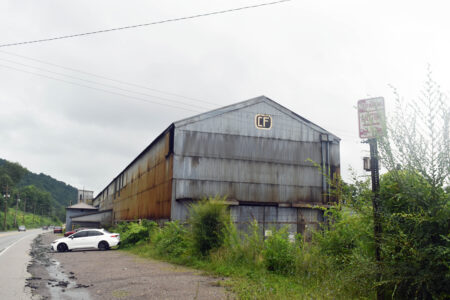
Four parcels of land connected to the Centre Foundry & Machine Co. at 74 Warwood Ave. in Wheeling were sold earlier this spring to Silicon Foundation Energy LLC. The deed transfer indicated that the property was acquired for $1.5 million.
According to the buyer’s website, Silicon Foundation is redeveloping the brownfield industrial site in Wheeling into a phased GPU (graphics processing unit) data center and energy technology campus built around existing power, cooling, fuel, BESS (battery energy storage systems) and modular power infrastructure.
"Shortly after the property was sold, we met briefly with a representative of the new owners," Wheeling City Manager Robert Herron said on Monday. "He represented that they intended to put a small data center on the property, demolish the garage-like structure away from the main building and then renovate and use the main building for manufacturing, possibly making batteries."
Steel and alloy work associated with the Centre Foundry dates back to the pre-Civil War era in Wheeling. The foundry specializing in iron castings and heavy industrial molds had been in operation for decades before it relocated from the north end of Center Wheeling to the sprawling 15-acre site at the south end of Warwood in 1923.
According to the Silicon Foundation Energy LLC's "strategic rationale" of selecting the site, the foundry property "starts with the hard parts already present: energized high-voltage service, industrial zoning, river cooling potential, gas infrastructure and a site plan that can phase from an initial 10 megawatt deployment toward a larger regional compute hub."
A representative of Silicon Foundation Energy LLC could not be reached for comment on Monday. The company is represented locally by attorney David Croft.
Herron noted that the company representative mentioned the many assets the former industrial site had to offer.
"He did represent that AEP has been contacted and that, based on the prior use as a foundry, sufficient power is available on site," Herron said, noting that conversations he has had with the company representative were a very general outline of how the overall project appeared to be a good fit for the property.
The former Centre Foundry site includes a 60,000-square-foot industrial building that is expected to remain in place, according to the new owner’s plan.
South Carolina-based engineering services firm Stokes Energy Inc. last month announced that they had been named the Prime Engineering, Procurement and Construction contractor for the project after Silicon Foundation closed on the property.
"This isn't a greenfield project," Derek Walters, CEO of Stokes Energy, announced. "It's a former steel foundry -- once the industrial backbone of America -- and now, we are bringing it back online as a 21st-century compute and energy technology campus."
Plans called for a three-phase development of the site, including an initial phase of developing a 10-megawatt modular data center system. The second planned phase includes the expansion to a 20 to 30 megawatts, and a third phase involves a large-scale expansion into a 100 megawatt regional compute hub.
W.Va. Sen. Laura Wakim Chapman, R-Ohio, said she was seeking information about the proposed project and was trying to contact Silicon Foundation representatives and see if they would agree to meet with the community so residents could hear directly from them what exactly is being targeted for the site.
"I’m hoping to get the owners to have a community event," Wakim Chapman noted. "I don’t know if they will agree to that or not. I’m still waiting on a contact."
Chapman said the site’s size is large, but in terms of data centers that are being developed in other areas of the nation, the property is fairly limited in size by comparison.
"In the grand scheme of things, it's not a huge data center," she said. "I'm going to ask the company to hold a community event where the community's questions can be answered."
Herron said city officials will examine the site’s plan before any development moves forward.
"The city will give a fair review of the project in accordance with state law and city ordinances," the city manager said. "There is a new state law on data centers that we need to consult."
W.Va. Delegate Shawn Fluharty, D-Ohio, on Monday said there has been murmurings about the potential development of this site for some time.
"They have not supplied the Legislature, to my knowledge, any details on this project," Fluharty said, noting that the data center bill - House Bill 2014, which he opposed - keeps everyone in the dark with "zero local control, zero transparency and zero input from the communities that are impacted, and now we’re seeing it in our own back yard.”
"Whether you agree with the proposal or not, there’s been nothing as far as any public hearings, local input, concerns and questions being answered," Fluharty said. "I have so many questions I’d like to ask. How is this going to impact rate payers? If there’s new electricity infrastructure that needs to be put in place at the foundry area, who is footing the bill? To my knowledge, if there has to be an improvement to our electricity infrastructure in that area, that gets paid by the rate payers. They essentially subsidize this project for a private company. That’s a major concern that I have, and that’s a question that hasn’t been answered by anybody."
There has been no word on any long-term jobs that will be created or short-term construction jobs, either, Fluharty noted, adding that if the data center does move forward, most of the tax revenue it generates will flow back to Charleston and will not stay in Ohio County. He explained that the property for tax purposes will be assessed at salvage value, not improved value, once the site is developed.
"That’s the result of bad policy," he said.
Chapman, who supported the data center legislation, said the bill included protections for local utility consumers.
"House Bill 2014 that we passed in 2025 - which is what we called the microgrid bill - there are ratepayer protections in there," she said. "I don't believe that it will affect electric prices like everybody is fearful of. It does have ratepayer protections in that bill. But as far as the details of the project, I don't have any insight on that. I would like the company to come and answer questions from the community."