
Data center debate prompts monitoring discussion in Martins Ferry
Trending
MARTINS FERRY -- As AI data center development draws growing scrutiny across the region, Martins Ferry may be moving to get ahead of potential impacts by exploring preemptive monitoring measures and discussing how to protect local environmental and public health conditions.
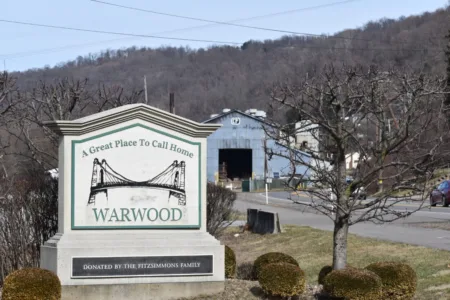
The discussion also comes as data center-related development continues to surface elsewhere in the region, including in Warwood, where recent proposals tied to the former Centre Foundry property have drawn public attention and concern.
In Belmont County, separate reports have also pointed to early-stage data center campus concepts, further fueling regional debate over energy use, environmental impact and long-term community benefits.
Martins Ferry Councilman Andrew Smay said, while it later clarified as a facility intended to manufacture modular components for data centers rather than a full-scale data center, recent conversations about possible data center projects on both sides of the river warrant closer attention, even if current proposals are outside the city's jurisdiction.
"There have been talks of data centers being out in the old Centre Foundry in Warwood. This is obviously out of our jurisdiction so there's very little we can do, it's a different state, different county, different city," Smay said, pointing out the city is just 1,400 feet from Warwood.
Smay said concerns seen in other communities include noise, light, air quality and wastewater impacts, including issues tied to large-scale cooling systems used by data facilities.
"Noise pollution which includes both audible and infrasound, light pollution, wastewater pollution, air quality concerns that have been documented in other places where data centers have been built," he said.
Smay said he recently attended a town hall in Warwood and met with local and state officials, including West Virginia Sen. Laura Wakim Chapman, regarding ongoing discussions about potential development near the river.
"Because of the discussion I had with her I am even more at ease with how this will progress into the future," he said.
He added that while state legislation in West Virginia is expected to increase oversight of data center development, Martins Ferry should consider its own long-term monitoring strategy.
"One idea to take into consideration by the city in the future is to place audio sensors around the city at different locations," Smay said. "Other types of sensors, air quality sensors, things of that nature... If we establish a baseline before any data center goes in then we would have the ability to have evidence that their data center or facility was in fact impacting the quality of our environment."
Service Director Andy Sutak asked whether funding sources might be available to support such monitoring equipment, indicating the city may pursue potential grant programs and other state and federal funding opportunities as part of broader environmental and infrastructure planning efforts.
Councilman Gus Harris expressed strong opposition to data center development, citing concerns over resource use and community impacts.
"Those data centers are the worst thing that can happen in this county," Harris said. "They use millions of gallons of water to cool their centers... They take up thousands of acres. They tax our resources and they give nothing back... All they do is take, take, take."
He added that other communities have expressed regret after allowing similar facilities.
"There's other states that let them in and they regret it," Harris said. "Communities are getting sick. [There's ] hearing pollution, air pollution."
Harris questioned whether baseline monitoring would even be necessary if impacts were not expected.
"If they were legit, why would we even be talking about our health or baseline data?" he said.
The discussion comes amid broader national debate over AI-driven data center expansion, which has sparked increasing public backlash due to high energy and water consumption, infrastructure strain, and limited long-term employment benefits. Several projects across the country have been delayed or reconsidered as communities weigh economic development against environmental and quality-of-life concerns.
No formal action was taken in Martins Ferry regarding a monitoring plan , but the conversation signals a growing interest in preparing for potential regional development before projects are fully proposed or constructed.
"If we establish a baseline before any data center goes in then we would have the ability to have evidence that their data center or facility was indeed impacting the quality of our environment,” Smay said.