
LaRose promises appeal of ruling that blocks Ohio’s citizenship ask for motor voters
Trending
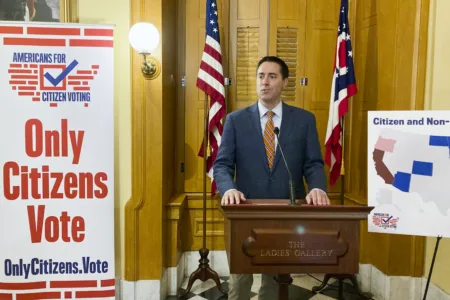
Ohio will appeal a federal court ruling blocking a state law requiring a person to present proof of citizenship before registering to vote while applying for a state driver's license.
“Under this order, the Bureau of Motor Vehicles would be required to offer a voter registration form to a person who's applying for a driver's license, even if that person can’t verify that they’re a citizen," Ohio Secretary of State Frank LaRose said in a statement. “We strongly disagree with that decision, and I've asked our legal team to file an immediate appeal. I will vigorously defend our legal authority to safeguard our voter rolls and protect the integrity of Ohio's elections."
In a ruling this week, a federal district judge held that Ohio's so-called "motor voter" law violates the National Voter Registration Act.
"More than three decades ago, federal lawmakers on both sides of the aisle recognized that more eligible citizens would exercise their fundamental right to vote if they had easier ways to register," Judge Solomon Oliver wrote. "Currently, Ohio's process for offering voter registration simultaneously with driver's license applications does not comply with Section 5 of the NVRA."
The Ohio Ballot Board recently approved a vote in November which would amend the state constitution to require voters to present a government issued photo identification.
That is already Ohio state law, but not in the state constitution.
"If approved, the proposed amendment would require Ohio voters to present a government-issued photo identification in order to vote," a summary of the amendment states. "To vote in person, voters would be required to present one of the specific types of government-issued photo identification listed. In-person voters who do not possess photo identification because of a sincere religious objection to being photographed would be permitted to provide an alternative verification of their identity, as provided by Ohio law."