
Uptick in Lyme disease cases has Belmont County on alert
Trending
MARTINS FERRY - Belmont County leads Ohio in Lyme disease cases by leaps and bounds.
There are currently 121 confirmed cases in Belmont County, with the second-most cases in the state being Jefferson County with 78 confirmed cases.
Belmont County Health Commissioner Robert Sproul said there has been a significant increase in ticks coming from the East Coast into the county, but also more doctors are testing for Lyme disease.
"We’re kind of wondering if it’s more of the case that our local physicians are testing more for Lyme disease," Sproul said. "In years past, a lot of people wouldn’t really test for Lyme disease because it wasn’t as prevalent here. Now that we’re starting to see it, they’re testing a little bit more, which is a good thing, because the quicker you can get tested and if it’s positive, the quicker you can get antibiotics."
He added that the importance of getting tested is to get on antibiotics to lessen the severity of Lyme disease.
Lyme disease can cause long-term effects if you either don’t catch it early enough or ignore the symptoms.
According to the Harvard School of Medicine, early symptoms of Lyme disease include fatigue, malaise, lethargy, muscle or joint pain that moves around, loss of appetite, swollen lymph nodes and fever.
"The standard bull’s eye rash is a sign of a tick bite. Another situation is people get flu-like symptoms where they get achy, they get very tired, fatigued, and just almost like the flu," Sproul said. "If they're feeling sick and can't figure out what it is there’s a fair chance that they could have Lyme disease."
Symptoms of Lyme disease include fatigue, malaise, lethargy, muscle or joint pain that moves around, loss of appetite, swollen lymph nodes and fever.
He added that not only Belmont County, but Ohio has seen a lot more species of ticks move into the area.
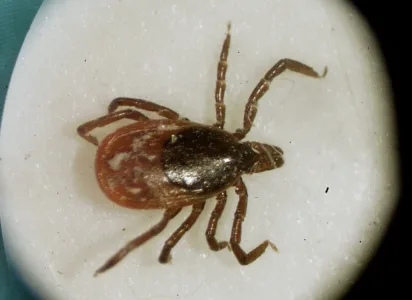
"The Lone Star tick wasn’t here 10 to 15 years ago. And now it’s throughout Belmont County and moving across to Ohio. We’re seeing new species of ticks that are moving in the area. They’re much smaller and much harder to find and remove," Sproul said. "The lone star tick is about the size of a flake of pepper. I mean, it’s a very, very small tick, as opposed to a dog tick, which is a fairly good sized tick."
He added that residents must remain vigilant after spending time outside.
Sproul said that there’s a lot of over-the-counter tick preventatives, with some killing ticks and some just preventing them.
DEET is a popular over-the-counter tick repellent, but many people do not like to use it due to the various chemicals in the repellent.
DEET is an insect repellent that is used in products to prevent bites from creatures such as mosquitoes, biting flies, fleas and small flying insects. DEET is a colorless liquid that has a faint odor and does not dissolve easily in water.
According to the National Pesticide Information Center, people who have left DEET products on their skin for extended periods of time have experienced irritation, redness, a rash and swelling.
Sproul recommends wearing light-colored clothes so that you can see if a tick lands on you or is crawling up your leg, showering after you’ve been out in the woods for a while and being as vigilant as possible.
According to the Ohio Department of Natural Resources, if you are bitten by a tick, carefully remove the tick, including its mouthparts, from your skin using tweezers. Monitor your health in the following days. While the CDC recognizes a 36- to 48-hour window is needed for disease transmission, there is evidence that transmission can occur sooner.