Rev. Shannon Blosser: Love Thy Neighbor Of All Abilities
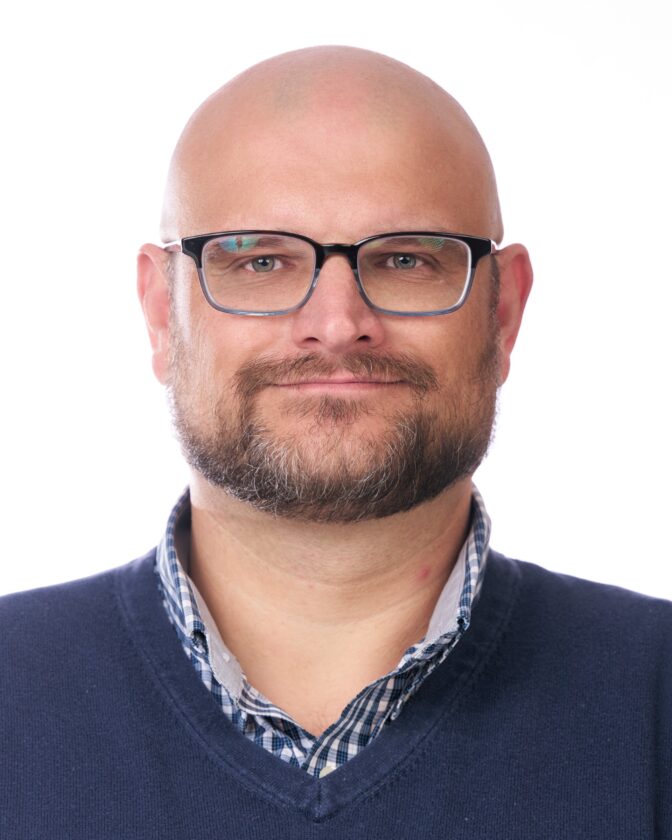
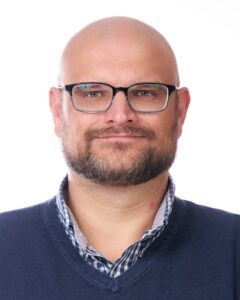
SHANNON BLOSSER
BENWOOD — The Rev. Shannon Blosser, pastor of Mount Olivet United Methodist Church and Benwood-McMechen UMC, has been working on making the houses of worship more inclusive, and he believes it is working.
“I started advocating at the start of the pandemic, primarily through the use of social media to share about what was taking place in our schools and churches regarding the lack of authentic inclusion,” he said.
“I have noticed more awareness that there is a need for better inclusion practices. I think people are starting to admit that simply being the church does not mean that the community is automatically a safe place for families and individuals with disabilities. That awareness has led to some conversations about building a more welcoming church, and also how to support real policies that can lead to actual help for the community.”
Blosser noted at Mount Olivet, he has noticed “a more accepting attitude” and “willingness to adapt to meet needs.”
“I think it comes with talking about what it means to accept, and also guiding people to authentic steps of engagement,” Blosser said. “I’m seeing people make room for people to walk around the sanctuary during worship, or work on how to adapt our bulletin to make it more accessible for people to read. It’s been a blessing.”
Blosser said it is important for the church to advocate for people with disabilities because “Jesus calls us to love God and to love our neighbors as ourselves.”
“When we make room for people with all abilities, we recognize that our neighbor is every person and in every person is a reflection of the created glory of God,” he said. “God’s creativeness is not just with those who can manage their way into every space, but is present in every person, of every ability and of every shape and size. The more we advocate and accept people of all abilities, the more we love our neighbor and the more we see the image of God in everyone.”
He noted the UMC has general rules that go back to founder John Wesley.
“One of the rules is simply ‘do no harm,'” he said. “When we advocate for spaces of inclusion for people of all abilities, we are making a stand against the harm that has been done by society, and yes, the church towards people with disabilities and seeking to, by another word, do good by building places and societies of grace and welcoming.”
Blosser and his wife Abbi have two sons, 12-year-old Noah, who is autistic, and 5-year-old Thaddeus, who has ADHD.
“My advocacy and my kids have helped me to recognize my own unique neurodivergence and accept who I am as a person with ADHD and maybe some aspects of autism,” he said. “The advocacy has been a blessing to my life and ministry, and I thank God for it every day.”
Blosser said the current political climate in both Charleston and Washington, D.C. has not been helpful to his cause.
“Too often, we want to look at every issue and every person who talks about an issue through our partisanship,” he said. “That has escalated in recent months, which is dangerous not just for democracy but in creating societies that build a beloved community of welcoming for all.
“The climate doesn’t make it easy. That desire to only see things through partisanship gets you easily branded as being one team or the other. When you speak out against cuts to the Department of Education and talk about how it affects people with disabilities or try to combat conspiracy theories related to vaccines and autism, people, sometimes, will immediately assume you are anti-this party or pro-that party. It’s exhausting, especially as a pastor who often says ‘there is more that brings us together than what tears us apart.'”
Blosser is more determined now than ever “to fight for a beloved community that welcomes and includes people with disabilities.”
“If we are not speaking about that, describing what it looks like, and raising our voices, then who will?” he said. “Disability rights and inclusion is not a conservative or progressive issue. Republicans are disabled. Democrats are disabled. Libertarians are disabled. Building a beloved community for the disability community should be an issue that brings us all to the table and say, ‘Yes, this is right and important.'”
Blosser noted what makes his churches special is there isn’t a specific program.
“What makes us special is that we don’t have a program. Sure, we started with doing our own Christmas Eve service for people with disabilities,” he said. “Yes, we have a sensory room for people. But what we are seeking to build is a place that brings everyone together in the same space for worship. Yes, we accommodate and make room for needs, but we are all together.”
The churches have autistic people in leadership and who volunteer at different events.
“We are not trying to create segregated spaces or places that are just for people with disabilities,” Blosser said. “We are trying to build a place that reflects the glory of God where everyone is welcome, loved, accepted and embraced in the same room and places together.”
He noted much of what is done at the church is “trial and error.”
“We’re not perfect and we are still learning the best ways to adapt and accept people,” Blosser said. “For instance, we thought a new projector and upgraded sound system would allow our sanctuary to become more accessible. It did, but not for everyone. We had one person, who has their own disabilities, that struggled to see the screen. So, we engaged and created something that would work for even that one person.”
Blosser said he grew up in the UMC in Shady Spring.
“I left for a period of time, primarily in college, not because I lost faith, but other things became more important,” he said. “As I came back to church after a low period of my life, I was discerning a desire to help people who have experienced brokenness, like I had, to find hope. It took a lot of time and prayer to realize it was a call to ministry.
“As a pastor, I desire nothing more than for people to know that God loves them and we do, too. Love has to be at the root of everything we do.”
Community
Rabbi Joshua Lief Is Building Bonds Between Faiths
Wheeling Native Jay Frey Back Home
Rev. Shannon Blosser: Love Thy Neighbor Of All Abilities
Amy Jo Hutchison Always Connected With Her Community’s Needs
Joyce Wolen and Staff Help Open Doors to Safe, Affordable Housing