Underground Railroad Museum On The Right Path Toward The Future
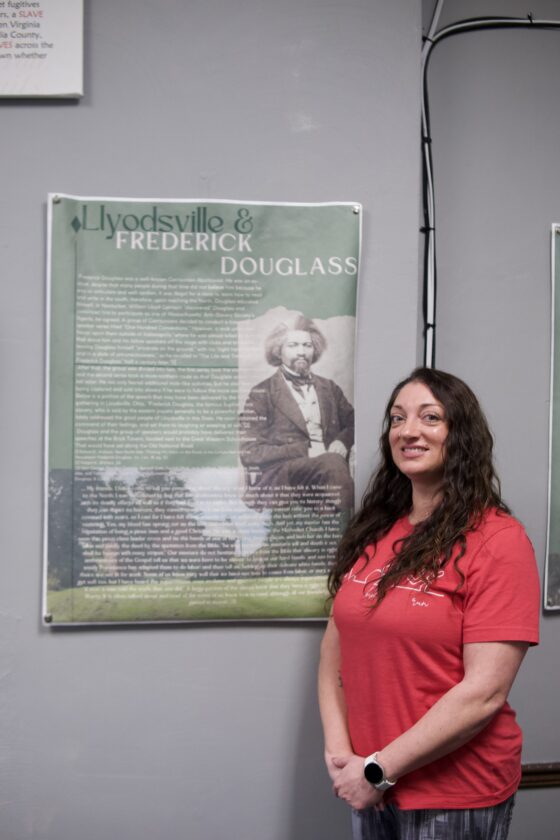
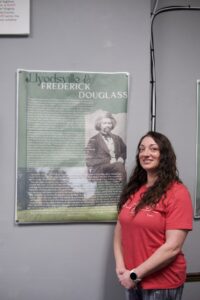
Underground Railroad Museum Director Kristina Estle is looking toward the future for the museum.
FLUSHING — This year is set to see the historic Belmont County Underground Railroad Museum move locations from Flushing to Morristown in the historic Black Horse Inn.
The Underground Railroad Museum received $3.9 million from Governor Mike DeWine’s Appalachian Community Grant Program in 2024. The program is part of a $154 million investment in Appalachian downtowns and destinations.
This past June, DeWine attended the groundbreaking ceremony for the museum. He previously said that he believes the restoration of the Black Horse Inn and converting it into the new home of the Underground Railroad is the perfect way to preserve Belmont County history while bringing money into Morristown.
Erected around 1807 as a smaller structure, the Black Horse Inn grew as additions came later in the years, according to ohio.org. It was the site of village founder Duncan Morrison’s tavern and was reputed to be part of the Underground Railroad during the Civil War. In April 2013, a group of people, led by the Morristown Historic Preservation Association, purchased the Black Horse Inn and started working toward its preservation.
Underground Railroad Museum Director Kristina Estle said that a lot of work is still needed to be completed on the new home of the museum but part of the grant is that the project must be completed by Oct. 2026.
The main floor of the building will be where the museum will be with the second floor being an Air B&B. Estle said that it is still unclear what will be going into the basement of the building.
She added that the Morristown Historic Preservation Association who owns the Black Horse Inn has recently received a $700,000 grant from the Ohio Department of Transportation.
John and Rosalind Mattox founded the Underground Railroad Museum more than 30 years ago. Originally a traveling trunk of artifacts that Mattox carried into schools eventually grew into a collection of nearly 8,000 items.
The current location of the museum is in a 1930s bank building in downtown Flushing. It has experienced multiple roof leaks that have damaged the interior and placed the museum’s collection in jeopardy.
By renovating the Black Horse Inn to house the collection, the current project brings the museum into a facility that actually existed during the time the “railroad” was in operation.
Estle said that although she is excited to move into the Black Horse Inn she becomes emotional when thinking about leaving the museum’s current location.
“I still tear up a little bit every time I think about leaving this building. I’ve spent the last eight years of my life here. That’s a long time, but this is such a beautiful opportunity. It’s going to be amazing,” she said. “I have loved it here, but moving to the new location is just going to grow our organization to where it should be and provide us so many more opportunities and I’m so excited about.”
Estle became the director of the museum in 2019 after Mattox died.
“I started here under Dr. Maddox as an intern. I knew very little about black history and about the Underground Railroad,” she said. “And it wasn’t until his passing that I decided to keep coming in to open the doors that I realized that this is it for me. This is my calling. I was meant to be here.”
In 2020, Estle got her master’s degree in Public History Museum Studies at Southern New Hampshire University.
She said she was able to tailor her curriculum around the Underground Railroad, abolitionism, the transatlantic slave trade and the civil rights movement.
As Estle prepares to move into the new location, she said that the museum is still at its current location at 121 E High St in Flushing and is open by appointment.
While organizing the artifacts Belmont County Geographic Information System Director Anthony Atkins and Estle teamed up to find an easier way to document all of the artifacts.
“Anthony Atkins actually created an app for me to be able to catalog items. And it goes directly into a database,” Estle said. “We have over 8,000 items, so I’m thinking that it’s time for interns. So I’m going to be throwing out an internship opportunity out there to bring in students solely for cataloging items.”
She added that not everything in the museum will be moving into the new museum.
Estle said that the museum has various items that are not related to the Underground Railroad or Black history so this move will allow her to consolidate the inventory.
“It’s still very hard for me to wrap my head around the idea of leaving this place, though we are continuing Dr. Mattox’s legacy. This was his baby, this was his creation,” Estle said.
Community
Rabbi Joshua Lief Is Building Bonds Between Faiths

Wheeling Native Jay Frey Back Home
Rev. Shannon Blosser: Love Thy Neighbor Of All Abilities
Amy Jo Hutchison Always Connected With Her Community’s Needs
Joyce Wolen and Staff Help Open Doors to Safe, Affordable Housing