
Douglas remembered for more than wrestling prowess across Ohio Valley
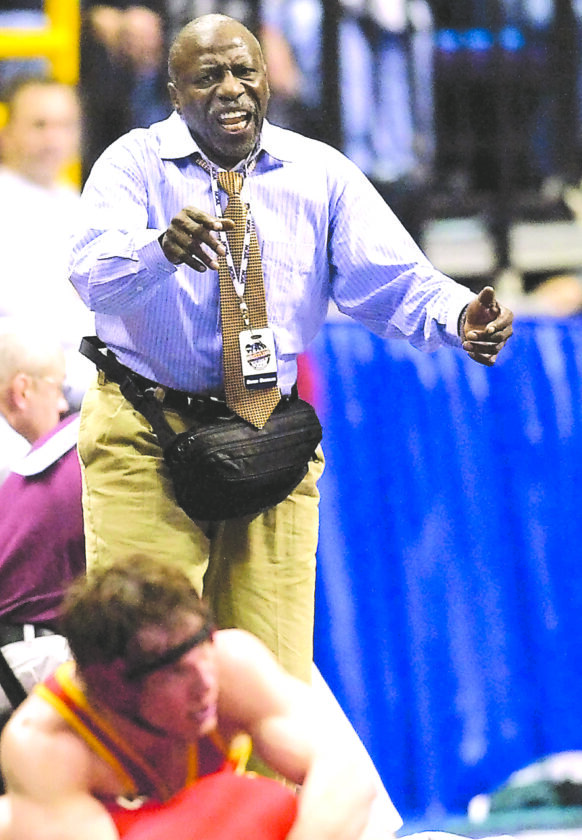
Iowa State head coach Bobby Douglas yells instructions to Nick Passolano during his 174 lb weight class first round match Thursday, March 17, 2005 at the NCAA Division I wrestling championships. Iowa State is the third seed in the tournament.(AP Photo/Tom Gannam)
BRIDGEPORT — Nationally– and indeed, globally– Bobby Douglas was known as a trailblazing, championship-winning wrestler and coach. In the Ohio Valley though, while that is doubtlessly recognized, Douglas, who passed away on Monday at 83, was also known as an inspiring mentor, a steadfast friend, and a role model for the younger generations.
And, for those who knew him from his first days at Bridgeport High School, those accolades on the mat were a long time coming.
“In the high school newspaper, he said, “Someday I’ll wrestle in the Olympics,'” Gordie Longshaw, a good friend of Douglas’ and a contemporary of his growing up in Bridgeport, said. “So it’s funny, imagine making a statement like that when you’re a young man, not knowing he’d ever be in two Olympics as a wrestler and once as a head coach, and also many more as assistant coach for the United States Olympic team.
“He’s the first Black wrestler, first Black captain for the United States, and the first Black coach, ’92 Barcelona Olympics. So he took all the racial and minority issues and rose above that. He went to West Liberty for a year and he lived up in the attic of the dorm because he couldn’t afford room and board. He’d hitchhike back and forth from Bridgeport.”
Longshaw said Douglas continued to inspire after his days on the mat were over.
“He coached one outstanding wrestler called [Cael] Sanderson, who’s the coach of Penn State, he coached him and his brother. Bobby’s very well-respected.
“I taught at Bridgeport, and when he would have camps for young kids to wrestle, I would work camps with Bobby, and of course he would have wrestlers from all over. We kept in touch, and we were very close.”
Nobody was more closely linked to Bobby Douglas in his early days as a wrestler than George Kovalick, who was Douglas’ wrestling coach at Bridgeport and West Liberty. David Kovalick, George’s younger brother and a teammate of Douglas’ at Bridgeport and West Liberty, spoke about the two’s relationship.
“Bobby grew up in one of those little coal mine company houses in Blaine and lived with his grandma,” Kovalick said. “His grandma raised him, and George understood that situation and he tried to help him out a little bit with some basic necessities. That was a good wrestling program George had at Bridgeport. I think in ’55 they were runners-up in the state. And that’s when, you know, everybody was in the same class regardless of size of school. In ’59 they ended up winning the state, and that’s when Bobby was a sophomore.
“I’ve heard people ask George before, what did you do to teach Bobby all these skills? And he said, well, he was in high school, I knew what I was doing, but by the time he got to West Liberty, when George moved over there, he said Bobby knew what to do, how to do it, and when to do it. He said ‘I’m cautious about not trying to overcoach him.'”
“He said ‘Someday, if he’s interested, he’s going to make a very good coach.’ Well, that was prophetic because that’s kind of what ended up happening. But there was a good personal relationship between those two, a lot of respect for each other.”
Kovalick said that his brother George encouraged Douglas to transfer to Oklahoma State after two years at West Liberty, a move that came after Douglas made it all the way to the 1963 Division I championship at 130 pounds, losing to Oklahoma’s Mickey Martin 12-8.
“Bobby talked to George about it, he thought maybe he was letting him down, and George said, this is an excellent opportunity for you, you should go and do this,” Kovalick said. “So that’s the kind of relationship that they had, and it was really very nice.”
Douglas would go on to coach George Kovalick’s son Mike at Arizona State. Kovalick said that Douglas always stayed in touch with the family, and he and Douglas would often catch up in-person whenever Douglas would come back around the area.
“We were teammates in high school and college both,” Kovalick said. “You know, he was the man. When he talked, you listened to what he had to say– but he was not a person who liked to hear himself talk. If he thought that he could help you with what you needed to improve on, he would just say, ‘I think you should do this,’ or, ‘You need more reps at this,’ or whatever. He was a good teammate.
“When he was pretty much done with his wrestling career as an athlete and as a coach, when he came back to the Ohio Valley, thanks to Gordie, they would get in touch with me so that we could visit. When I was coaching at Barnesville, two separate times he came out to visit while we had our invitational wrestling tournament. I think one year he came out and presented the awards to the placers, which was very nice.”
Bill Welker, a Wheeling native and wrestling legend in his own right, became friends with Douglas in the 1980’s when Douglas asked Welker to set up his wrestling clinics in the Wheeling area. Welker admired Douglas for his ability to battle against adversity in his career.
“A lot of people don’t realize he came up at a time when, you know, the ’50s and ’60s, you still had very immediate problems with integration and segregation,” Welker said. “He had to deal a lot with that was growing up. He had to deal with a lot of prejudice and racism. He’s seen both sides of it.
“Just a wonderful person. I guess one word you could say summed up Bobby was ‘perseverance.’ He didn’t let anything stop him from accomplishing what he wanted to accomplish. And he was a good student. He was actually a candidate, a doctoral candidate at Arizona State I believe. But that’s when he ended up going to coach at Iowa State. But he was accepted as a student for the doctorate program, I believe it was in education.”
During Douglas’ time as a wrestling coach, his feats included 13 NCAA champions, 110 All-America performances, and 68 conference titles. One such All-American at Iowa State was David Bertolino, a Mt. Pleasant native and Buckeye Local alum.
“I started wrestling when I was 8 years old, and my very first summer wrestling camp was at a Bobby Douglas wrestling camp at Wheeling Jesuit,” Bertolino said. “I remember being one of the youngest wrestlers there, and my mom would commute me every day. I fell in love with wrestling. That kind of started my long journey, which led me to being one of the nation’s top 160-pound wrestlers in the country back in 2003. Full circle, Bobby Douglas recruited me to wrestle at Iowa State.”
Bertolino said that Douglas’ impact on his own career and life was profound.
“I owe a lot of who I am to the sport of wrestling, and he helped develop me as a man and as a person. It’s opened doors for me that I would never have had. When I look at the pivotal moments in my career, and the things that needed to fall into place in order to be able to have the career that I did in wrestling, Bobby was there.
“Bobby was there at the beginning, and then, getting an opportunity to wrestle at one of the most prestigious collegiate wrestling programs in the country at Iowa State, and getting recruited by Bobby. I mean, that’s just a dream come true, to wrestle at Iowa State, and to be able to wrestle for Bobby Douglas.”
Bertolino and Douglas remained close after Bertolino graduated in 2008.
“He was obviously much, much more than a coach to me,” Bertolino said. “He was a mentor, someone that I cared deeply about. And I cared about him and his family, and he cared about me and my family. On my birthday, he would always call and check in, and I would call him on his birthday, and we’d catch up on the phone since I moved away from Ames. He’d always ask how my family was doing, and I let him know that I was still involved in wrestling and still coaching and being able to give back to the sport of wrestling that’s given me so much.
“I think that at the end of the day, that’s it. I think that’s what Bobby stood for. One, he was just an amazing human. He cared for people, his wrestlers, he cared about them deeply and wanted to see them succeed on and off the mat and did whatever he could.
“You know, I know that while being recruited, it was hard for my mom, to see me move away. And she was nervous and scared. I just remember Bobby looking at my mom and assuring her, that he was going to look after me and it was going to be okay. Bobby was compassionate and my mom truly believed, when he said that, you know, I’m gonna take care of your boy.”
Bertolino said his experience was not isolated to just him.
“A trailblazer– I mean, that’s what he did his entire life,” Bertolino said. “That’s what Bobby should be remembered for. He’s passed that along to a lot of– I mean, thousands and thousands of wrestlers that wrestled for him or that interacted with him. He’s a pretty remarkable human being, and he’ll be sadly missed by a lot of people, globally who are mourning him all around the world, I know.”
Local Sports
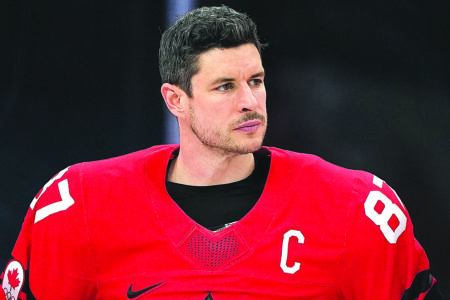
Penguins captain Sidney Crosby placed on injured reserve after getting hurt at the Olympics
Monroe Central ends season with 50-36 loss to Fort Frye
CALDWELL — Monroe Central’s fine girls basketball season came to a sudden halt Wednesday night with a 50-36 ...
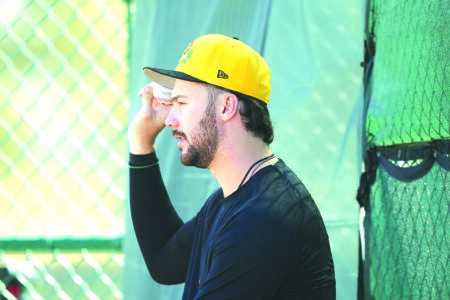
Paul Skenes loses 4 strikes in Cy Young winner’s spring debut
Olivia Olson’s career-high 31 points propel No. 8 Michigan to 88-86 OT victory over No. 13 Ohio State
COLUMBUS, Ohio (AP) — Olivia Olson scored a career-high 31 points, including a driving jumper with 3.2 seconds ...
Douglas remembered for more than wrestling prowess across Ohio Valley
Union Local completes a trifecta with D-V district win over Ferry
ST. CLAIRSVILLE — Beating the same team three times in a season is something that doesn’t happen all that ...