
Cumberland Trail firefighters train for icy rescues
Trending
ST. CLAIRSVILLE -- Cumberland Trail Fire District firefighters are ready should they need to rescue someone from icy water.
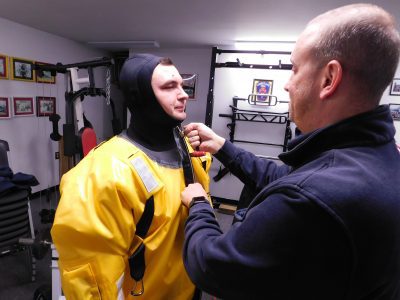
On Monday they were at Fox Commerce Park testing new equipment - four Mustang Commander ice rescue suits - on the pond there.
"We purchased some ice rescue equipment last year. ... We got these a couple months ago. These are the kind of things you need the weather we have right now to train," Assistant Fire Chief Dan Grady said, adding the cold weather is giving firefighters the opportunity to train and familiarize themselves with the suits. "It's not something we've ever been a part of before, prior to yesterday. (When) we had an incident where we had to rescue somebody who was stranded on the ice or fell through the ice, we would have had to call for another entity to assist."
He said ice rescues are rare, with the district's last ice rescue call coming about 10 years ago from a location near Belmont College. But the recent ice storms and cold weather-related emergencies have underlined the need for preparedness.
"We do have lakes and ponds and a couple reservoirs in the area, so the need for us to be able to provide some kind of rescue, it's possible," Grady said.
Fire Chief Tim Hall said the total cost of the four suits was $3,120. He thanked the Walmart Foundation for a donation of $1,000 toward the purchase. He added that he does not believe many area fire departments have this equipment, and he expects Cumberland Trail to be called on to render assistance in the event such a rescue is needed.
State certified instructor R.C. Fellows provided the training. More firefighters will undergo training next Tuesday.
Capt. Michael Lollini, who was among the firefighters to receive training, was impressed by the suits' insulation.
"It wasn't cold at all," Lollini said. "We got in. We did some different scenarios our instructor threw us at. We got the experience if it was a real-life scenario - obstacles you come across, different tools you have to work with, proper ways to get them out of the water."
"The ice was actually 10-12 inches thick. We had to cut a hole in the ice just to do the training," Hall said.
Lollini said a rescue situation would call for suited responders to have personal floatation devices ready. They would be attached to safety lines, throw lines for the victims to grab onto, then the responders would advance.
"You can't just get on the ice and walk to them. You have to get into a three-point stance or get on your belly and crawl across to them, because you never know how thick the ice is going to be," Lollini said.
The suits also have built-in spikes the firefighters can use to drag themselves across the ice.
Lollini said the suits have good freedom of movement, but the air pressure pushed to the top of the suit during operations can be awkward and require getting used to. The head covering also reduces hearing.
"It's one-size-fits-all and you have to adapt to the size of the suit," Lollini said. "I think everybody had the same feeling afterward. It was a really good experience, especially for something that we'd never done before."
They added that the suits are designed for activity near the surface of the water and could not be utilized to search for a body in cold weather.
In a rescue scenario, they would have about 14-45 minutes to rescue a victim from freezing, depending on conditions, the victim's health and factors such as something to hold onto to prevent drowning.