John Brown: Martyr or madman?
HARPERS FERRY, W.Va. – Fifty area residents were in Harpers Ferry on Oct. 17 just as abolitionist John Brown was – although the two arrivals were 156 years apart.
Brown, whose descriptions ramge from martyr to madman, started for Harpers Ferry, Va., (now West Virginia), Oct. 16, 1859, around 8 p.m. in the rain. At least one report notes that he walked from a rented farmhouse near Sharpsburg, Md., a few miles from Harpers Ferry, and another reports that he drove a wagon carrying tools and weapons.
The area residents’ trip was planned by the Great Stone Viaduct Historical Education Society, and we had a more comfortable trip than Brown’s group although it meant a 3:30 a.m. start from Bellaire to go by bus to Pittsburgh to travel by Amtrak.
“What made this trip to Harpers Ferry so special was the timing of our visit,” said attorney Daniel L. Frizzi Jr., GSV chairperson. “We entered the town 156 years after Oct. 16, 1859, and the day after the historic raid on Harpers Ferry and the federal arsenal by John Brown. Harper’s town was ready to commemorate this event with historic reenactments of that day held at the very spot where John Brown was captured.
“The fall color in the mountains during our trip by rail was so beautiful as our group passed over Sand Patch Grade down into Cumberland, Md., ” Frizzi said.
Noting the Harpers Ferry trip “was a huge success for GSV as the 2015 event season comes to a close,” Frizzi added, “Event planner and GSV board member David Slie has done a fantastic job of organizing trips to Elkins, Akron and Harpers this year, and he is already working on rail-related trips for 2016.”
Planning also was an important part of Brown’s raid on the federal arsenal. After renting the farm in Maryland in July 1859, he began to amass weapons and to train others for the raid.
He tried to convince Frederick Douglass, a former slave and abolitionist, to join the raid, noting, “When I strike, the bees will swarm, and I shall want you to help hive them.” Douglass refused, speaking against the raid.
Brown’s intention, according to some, was to free slaves and create a state of free blacks in the mountains while others believe “he hoped to create an army of former slaves and freemen to march through Dixie, forcing slave owners to free their slaves,” according to the historynet website.
The Harpers Ferry raid wasn’t his first militant endeavor regarding slavery. He was involved in “Bleeding Kansas” involving proslavery and anti-slavery factions, and Brown with others brutally murdered five, unarmed proslavery settlers along Pottawottamie Creek.
According to most reports, there were 21 raiders, including five black men. They gathered hostages along the way to the arsenal, including Lewis Washington, a great-grandnephew of George Washington. Initially, the raiders attacked the armory on Oct. 16, then the arsenal.
On Oct. 17 around 7 a.m., the conductor on a train traveling east from Wheeling informed railroad officials about the raid, and they, in turn, notified government officials.
Ironically, the first person killed by the raiders was a free black man, Haywood Shepherd, a baggage master on the train, after he and the conductor left the train to check over the situation.
The raiders faced the militia and the U.S. Marines, led by Lt. Col. Robert E. Lee.
Later, Lee and others were involved in the Civil War and beyond. Lt. J.E.B. Stuart, later Lee’s cavalry officer during the Civil War, was directed by Lee to carry a note to Brown, demanding his surrender at the arsenal armory, but Brown refused.
A biography, “John Brown Abolitionist”, by David S. Reynolds noted that another Civil War general, Thomas “Stonewall” Jackson, who died in that war, was among those supervising Brown’s hanging. At that hanging was John Wilkes Booth.
Two of Brown’s sons were killed in the fighting, and Brown was captured after being knocked unconscious. He was taken to Charles Town for trial and found guilty of murder, treason and inciting a slave insurrection.
Opinions varied about Brown, and writing in his favor were Ralph Waldo Emerson and Henry David Thoreau.
The subtitle on Reynolds’ book is “The Man Who Killed Slavery, Sparked the Civil War, and Seeded Civil Rights.”
To his hanging on Dec. 2, 1859, Brown was transported in a wagon, riding on the poplar box containing his black walnut coffin. He was buried near Lake Placid, N.Y.
Just before his hanging, Brown’s last words written on a note handed to a guard were: “I, John Brown, am now quite certain that the crimes of this guilty land can never be purged away but with Blood.”
Pokas can be reached at betty
Community
DATEBOOK
SATURDAY MARKET AT THE PIKE — The Pike 40 in Morristown hosts a farmers market every Saturday from 9 a.m.-noon ...
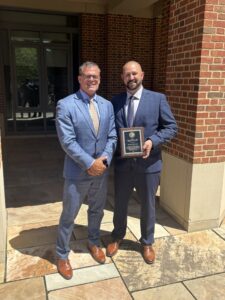
Steubenville police detective recognized by state for work with Jefferson County Drug Task Force
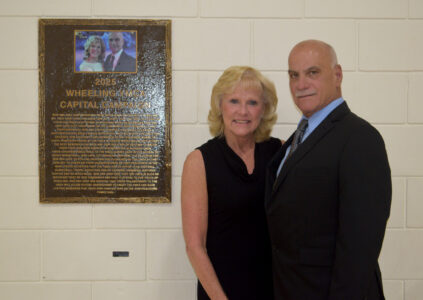
Wheeling YMCA Dedicates Gymnasium To Robert And Jodi Contraguerro
Local Briefs
UMWA Local #1304 to meet HOPEDALE — UMWA Local #1304 will hold its regular meeting at 10 a.m. Saturday, June 6, ...
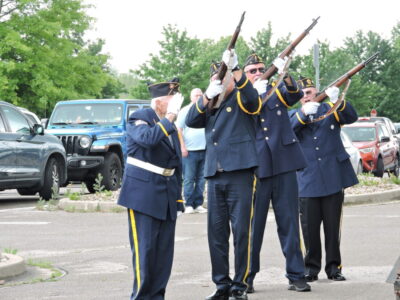
Weirton reminded of Memorial Day’s true meaning