
Greyhound racing could be ending
Passed farm bill includes provision to eliminate greyhound racing nationwide; now goes to the Senate
Trending
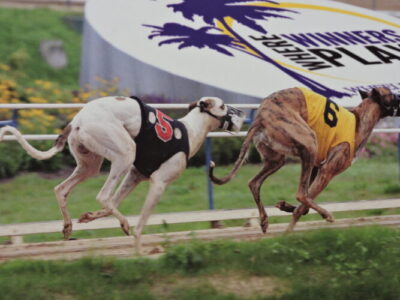
WHEELING -- A provision in the Farm, Food and National Security Act of 2026 that passed the U.S. House on Thursday would criminalize greyhound racing nationwide. That means the nation's two remaining dog tracks -- Wheeling Island Casino Hotel Racetrack and Mardi Gras Casino & Resort, both located in West Virginia -- could see greyhound racing come to an end unless the Senate intervenes.
The House passed H.R. 7567 by a 224-200 vote. Both of West Virginia's representatives -- Riley Moore, a Republican representing the 2nd District, and Carol Miller, a Republican representing the 1st District -- voted in favor of the bill, meaning they voted to make greyhound racing a criminal offense.
Moore, whose district includes Wheeling, had offered an amendment that would have exempted the West Virginia tracks from the provision. That amendment was defeated 239-187. Miller also voted for the amendment.
Moore expressed disappointment in the amendment's rejection when reached Thursday evening.
"I can sit here and tell you I was disappointed with the Democrats, but I'm just as disappointed with the Republicans," Moore said. "I'm disappointed with everybody in this whole process.
"This is insane that we're legislating on the federal level what is a state issue," he continued. "It just does not make sense to me. It just feels like there's this bizarre obsession in this town, Washington D.C., with what people in West Virginia do for a living, whether it's coal, greyhounds, natural gas, steel, whatever. It's just really disheartening."
Moore's amendment had support from national organizations including the National Fraternal Order of Police and International Association of Fire Fighters, which said the amendment would protect funding for pension systems for West Virginia first responders.
"Revenue from these (West Virginia) tracks fund roughly 40% of the pensions for law enforcement officers and other first responders," a letter from National FOP President Patrick Yoes stated. "Specifically in Wheeling, these pensions receive approximately $255,000 annually through a revenue-sharing agreement with the racetrack, which supports more than 300 active, retired or disabled law enforcement officers, other first responders and their surviving spouses."
In voting for the bill, Moore said the larger measure included provisions he supported, particularly for farmers. He pointed to an amendment from Rep. Anna Paulina Luna, R-Florida, that removed liability protections for companies that manufacture glyphosate-based pesticides like Roundup. He also supported a pilot program from Rep. Thomas Massie, R-Kentucky, called the Processing Revival and Intrastate Meat Exemption (PRIME) Act, which allows slaughter facilities to sell meat directly to in-state consumers.
Groups opposing greyhound racing applauded the vote.
"This is an historic victory for everyone who cares about dogs," said GREY2K USA Worldwide Executive Director Carey Theil. "It is the result of years of hard work by grassroots advocates and greyhound rescuers. ...
"The walls are closing in on this cruel industry. Greyhound racing is illegal in 44 states, and since 2022 gambling on greyhound racing has been outlawed in Arizona, Arkansas, Colorado, Connecticut, Kansas, Massachusetts and New Hampshire. Greyhound racing only exists in West Virginia because of subsidies totaling more than $19 million each year. The company that owns the final two dog tracks (Delaware North) wants out of racing but is required by law to continue to subsidize the activity to maintain its casino licenses."
But the financial impact on Wheeling could be significant.
Wheeling has long supported greyhound racing, citing jobs and revenue for the city.
"We've twice made the case to the Legislature on the importance of greyhound racing to our region," Wheeling City Manager Robert Herron said. "Our point is this should not be a matter for the federal government but for the state."
Delegate Shawn Fluharty, D-Ohio, a longtime supporter of greyhound racing in West Virginia, said he was frustrated by the lack of action from the state's congressional delegation.
"To me, I didn't feel like there was any push from our local representation to get on top of this, to secure the votes for the amendment," Fluharty said. "That's disappointing. It's going to have a devastating impact, particularly on the Northern Panhandle, and we should have had our congressional delegation sounding the alarm.
"They never did. Hopefully Sen. (Shelley Moore) Capito and Sen. (Jim) Justice can deal with this in the Senate."
Moore said he still believes the Senate could change the outcome.
"It is not in their bill in the Senate," Moore said. "There's obviously going to be differences and they're going to go to conference over this bill. Not only that, but Sen. Justice sits on the Senate Agriculture Committee and is presumably a conferee in this process. So I think we still have a long way to go before this is a done deal."
Capito said during a video conference with West Virginia media Thursday that the measure is still in early stages.
"This is just the first of many iterations of an agricultural bill," she said. "We know what's going on here. We want to be able to preserve the revenues that are coming in, so we'll see what happens and then we'll face that over here in the Senate with Sen. Justice."
Former Delegate Erikka Storch, R-Ohio, also expressed concern about the potential end of greyhound racing.
"My primary concern would be for those families that might be affected -- the jobs in our community and our state that greyhound racing provides," Storch said. "It's so strange to me that Congress is considering eliminating an entire industry."
She also noted broader economic impacts.
"It will negatively impact our municipalities and our counties, which receive money from racing. You also can't discount the people that come here for the greyhounds. Without that, there's really nothing to differentiate the casino in Wheeling from, say, The Meadows or The Rivers. That could really impact people traveling here."
Wheeling Councilman Dave Palmer also questioned federal involvement.
"Why is the federal government telling the states what they can and cannot do?" Palmer said. "It's hard to believe a provision to kill an industry that's been legal for 100 years, they have to sneak it through a farm bill."
Messages left with Wheeling Island Casino Hotel Racetrack and Steve Sarras, a local breeder and member of the National Greyhound Association, were not immediately returned Thursday afternoon.