
Belmont County EMA concludes study
370 trucks with placards observed
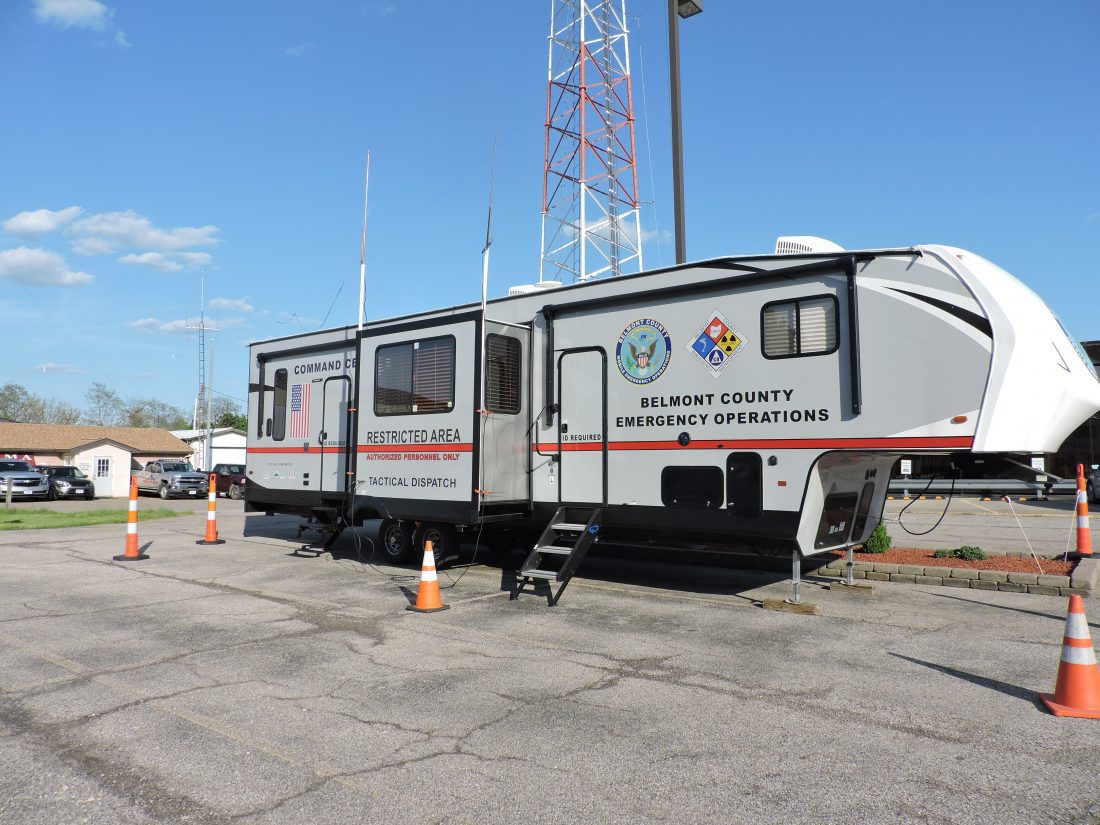
T-L Photo/CARRI GRAHAM THE BELMONT County Emergency Management Agency recently concluded its annual commodity flow study at the intersection of Aetna Street and Ohio 7. The information will aid them in tracking hazardous material on the roadways. Shown here is the EMA’s emergency response vehicle.
BRIDGDEPORT –The Belmont County Emergency Management Agency is taking preventive measures against potential hazardous situations by learning what vehicles are traveling on local roadways.
The EMA recently conducted its annual commodity flow study, held Aug. 15-16, using the Bob Evans parking lot in Bridgeport as a headquarters. Members of the Local Emergency Planning Committee and volunteers observed the intersection of Aetna Street and Ohio 7, tracking vehicles containing placards. The team used binoculars and cameras to record their findings.
The 24-hour study, held annually in a different location, allows the agency to track what kinds of hazardous materials are coming through the county in order to relay the information to first responders.
Becky Horne, executive administrative assistant of the EMA, said the information collected gives the agencies an idea of how to respond in the event of chemical spill and allows first responding agencies to be better prepared.
“Communication is the most important thing in life. We disseminate the information to first responders, including fire departments and law enforcement agencies, so they can better prepare for incidents,” Horne said. “Some stuff you can’t put water on — it can activate and cause a fire. They (first responders) have to use foam.”
The study’s results were compared to the EMA’s findings two years ago, which is the last time this particular study was completed.
“This year we had 370 trucks go through that have placards, averaging 15 (vehicles) per hour,” Horne said.
Each placard indicates what type of chemical the vehicle is carrying, she said. There were 100 less vehicles with placards this year in comparison to the previous period.
The majority of placarded vehicles that passed through included gasoline, diesel, hydrocarbons and propane. The busiest times for placard vehicles was between 9 a.m. and 2 p.m., Horne said.
“The majority of hazmat is transported along the river,” she added.
Horne wants to make residents aware that in the event of a wreck or spill, they should “shelter in place,” or bunker down at the current location.
“If you happen upon a wreck, roll your windows up, close the vents, turn the heat or air conditioning off, turn the car off. You can stay in your car for a couple of hours without having any air. We want you to shelter in place. We don’t want you to go outside. It’s good to stay indoors,” she said.
The commodity study will help local agencies develop planning methods for problems that may arise in the transportation of Hazmat materials.
“It’s important for us to be prepared to not only protect society, but also the environment,” Horne said.
Horne thanked Bob Evans for allowing them to conduct the study in the parking lot of the restaurant, she added.
To receive emergency notifications, including severe weather, power outages, chemical spills or other emergency related situations, register all cellular devices with the CodeRED system. To receive alerts, register a phone number at www.belmontcounty911.com and click on the CodeRED link. For further questions, call the non-emergency number at 740-695-9104.
Local News
Property tax petition quest for Ohio ballot pushed to 2027
Ohio voters will not get the chance to eliminate property taxes in the state when they go to the polls this ...
Belmont County man dies following ATV crash
ST. CLAIRSVILLE — A Belmont County man died Saturday after an ATV crash in Washington Township, according to the ...
Pickleball serves up new recreation option in St. Clairsville
Briefs
Bellaire Finance Committee meeting set for Friday BELLAIRE — The Village of Bellaire Finance Committee will meet ...

Shadyside targets another 40 properties in cleanup effort
Police Reports
Martins Ferry Police Thursday — 12:21 a.m. — Officers were out on the 600 block of Columbus Avenue ...